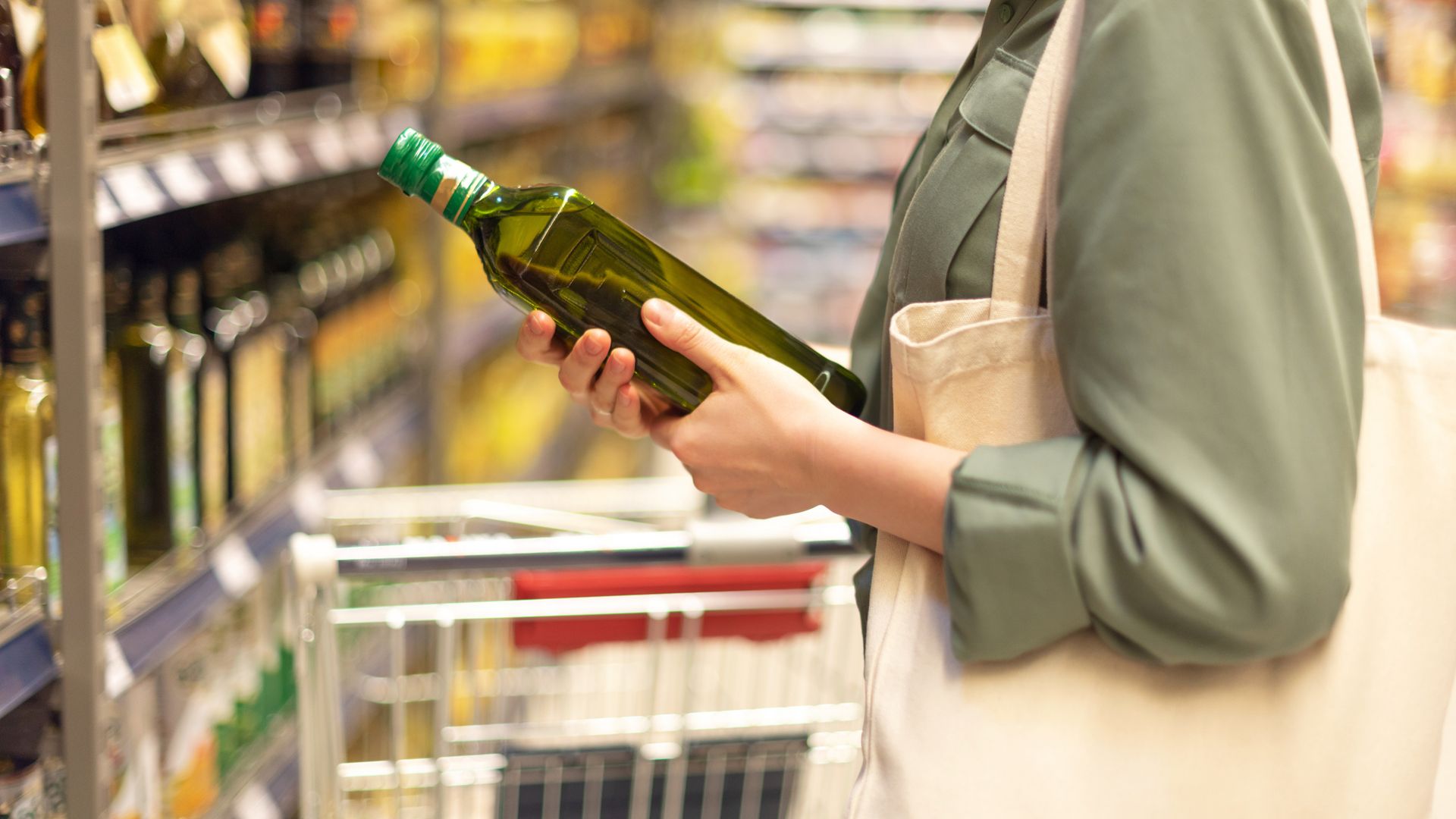
When it comes to health hacks, there's no better place to source inspiration than the World Wide Web. However, hidden amongst plenty of helpful tips are useless suggestions and sometimes dangerous endorsements from people with little to no credentials.
That's why when we came across the olive oil trend, we decided to ask the experts for their advice on whether having a shot of the traditional cooking oil is really beneficial or doing more harm than good.
Championed by the likes of Kate Hudson and adopted by millions of online users, the idea behind drinking olive oil originated from ancient Mediterranean, Middle Eastern, and Sicilian traditions.
Downing a gulp of the oil is alleged to aid digestion, reduce inflammation and support heart health, but can one sip of the stuff really do all that or is it another fad taking the internet by storm? Leading nutritionist and Sunday Times bestseller Rhiannon Lambert is here to bust the myth wide open and clear up the rumours once and for all.
Extra-virgin versus the standard crop
To fully understand how it works, we need to make sure we are starting with the correct ingredients, something that gets lost in the online discourse about the powers of olive oil. There is an important distinction in the type of oil that could have potentially positive effects.
Rhiannon explained: "A really important distinction here is between extra-virgin olive oil (EVOO) and standard refined olive oil. EVOO is cold-pressed and minimally processed, meaning it retains naturally occurring plant compounds called polyphenols, alongside its monounsaturated fats.
"Refined olive oil, by comparison, has undergone processing that removes much of these beneficial plant compounds. While this makes it more suitable for higher-temperature cooking and it absolutely still has a place in a balanced diet, this trend is specifically referring to EVOO because it retains more of the naturally occurring polyphenols and plant compounds."
The expert continued: "Polyphenols in EVOO are understood to act as antioxidants in the body and may help to support normal inflammatory responses and cardiovascular health when consumed as part of an overall dietary pattern. On social media, this has been translated into the idea that consuming it in a concentrated 'shot' must somehow maximise those benefits, particularly for gut health or inflammation. However, this is not a practical way to look at the consumption of this type of oil.
"The research that we have of EVOO being particularly beneficial to us sees it as part of the overall diet," she added. Rhiannon pointed out: "It is this combination of healthy fats, polyphenols and plant diversity that is consistently associated with health benefits, rather than olive oil being taken on its own on an empty stomach.
"While there is nothing inherently harmful about taking a small amount of EVOO on its own, there is limited evidence to suggest it provides any additional benefits beyond when it is consumed as part of a meal and balanced diet."
Is it true that olive oil has 'healing properties'?
Peddled as being the antidote to inflammation and the key to great gut health, influencers are claiming they are seeing massive differences in puffiness after taking olive oil for seven days.
But is this true and is it the oil that's altering their appearance or something else? Rhiannon thinks it is unlikely. She said: "Extra-virgin olive oil contains monounsaturated fats and polyphenols which may help to support cardiovascular health and normal inflammatory responses when included regularly as part of a balanced diet.
"However, it’s important to view olive oil as a nutritious food rather than something with medicinal or 'healing' effects on its own. Its benefits are seen as part of long-term dietary patterns, rather than from single foods acting in isolation. Remember, there is no such thing as a 'superfood', it is the overall quality and balance of the diet that matters most!"
The body's response
So, you have decided to give the hack a try. What happens next? Well, according to the expert, a lot of absorption of vitamins and calories. It is important to remember that olive oil is calorically dense (approx 120 calories per tablespoon) and taking a shot could be adding significant calories without the satiety or nutrients of chewing food.
She explained: "When you consume extra-virgin olive oil, the fats are digested and absorbed as an energy source, while the polyphenols act as antioxidants within the body.
"These compounds may help to reduce oxidative stress and support normal physiological processes related to inflammation and heart health. Emerging research also suggests that the polyphenols in olive oil may play a small role in supporting gut health."
Rhiannon revealed: "Olive oil is still classed as a fat and is energy-dense, but when it is consumed as part of a meal it can also support the absorption of fat-soluble vitamins such as vitamins A, D, E and K from the foods eaten alongside it."
Alternatives to the trend
If, like me, you are a little sceptical and don't really fancy waking up and chugging oil before anything else hits your stomach, there may be another solution that provides some of the same benefits of ingesting extra-virgin olive oil.
"Rather than taking olive oil as a shot, a far more beneficial and evidence-aligned approach is to use extra-virgin olive oil in the way it has traditionally been consumed for centuries - as part of meals that include vegetables, wholegrains, beans, lentils and other fibre-rich plant foods," Rhiannon concluded.
She suggested: "Drizzling olive oil over salads, roasted vegetables, pulses or wholegrains allows you to benefit not only from its healthy fats and polyphenols, but also from the fibre, vitamins and plant diversity of the meal itself.
"This combination is much more reflective of the Mediterranean dietary pattern, where the health associations are seen."