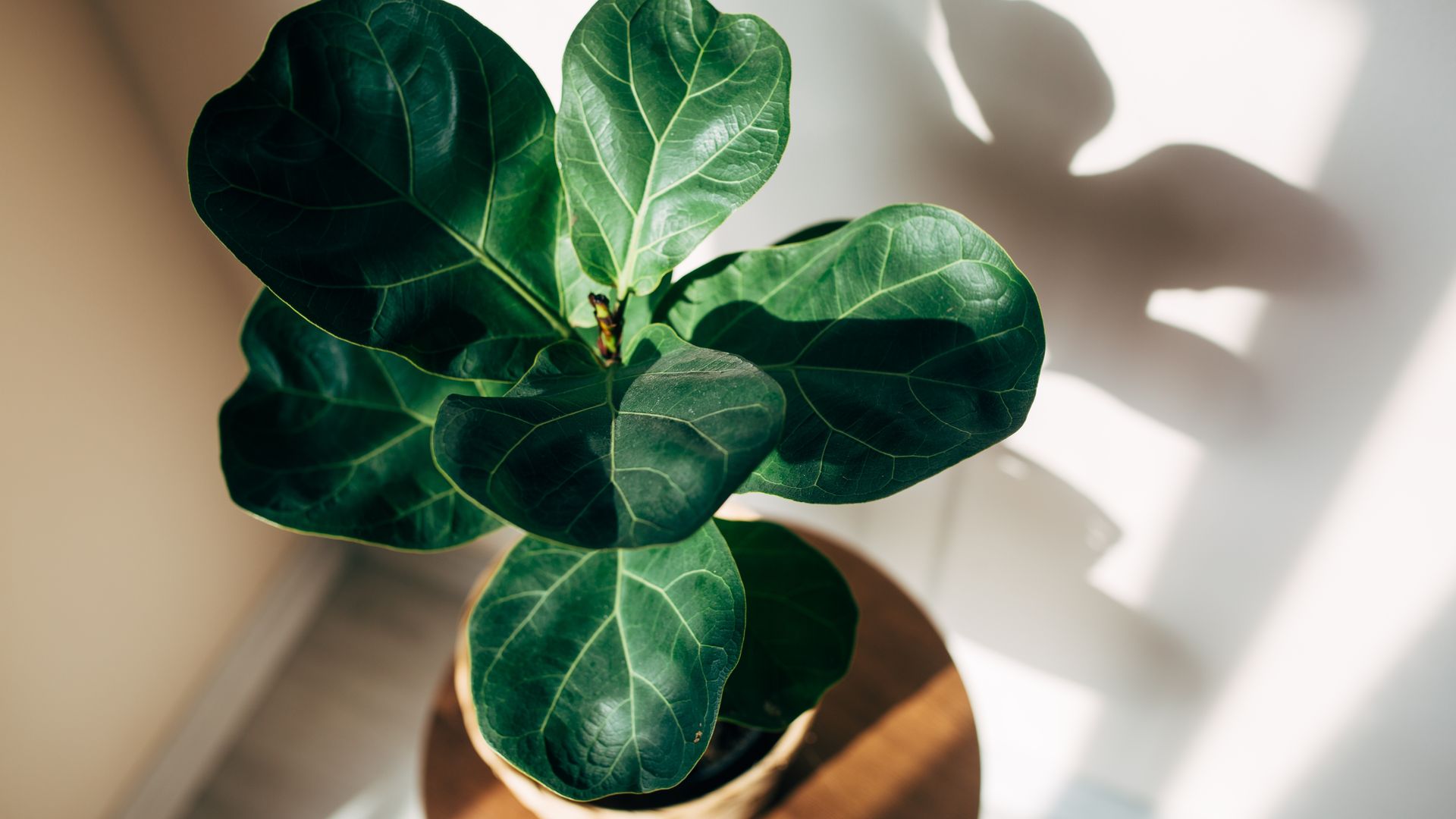
Having indoor plants not only brings colour, texture and stylish interiors to our home, but they're also great for our mental health. Numerous studies have shown that looking after indoor plants is a great hobby that can lower our stress levels, keep our minds focused when we're feeling stressed, and also increase our productivity. I love nothing more than strolling around a garden centre and picking out a new plant to brighten up a dark corner in my home. But there's nothing more disappointing than giving your indoor plant all the TLC you can, only for it to wither, or worse, die.
It can be a headscratcher when this happens, and it's usually because people overwater it for fear of it drying out, or starve their plant of water if they become complacent with a plant they deem 'low maintenance'. But, while fiddle leaf fig plants are super trendy and not overly challenging, they can be a little tricky to master.
The plants, also known as Ficus lyrata, are great because of their bold, glossy, and instantly recognisable fiddle-shaped leaves. They can also grow to a large size (up to two-and-a-half metres for indoor plants), making them a brilliant choice if you're after an indoor plant to be a statement piece in your home. Here are some tips on making sure your fiddle leaf fig stays alive and thrives…
Why fiddle leaf plants can be tricky to care for
Fiddle leaf plants aren't especially difficult to care for (more challenging plants exist out there), but they are famous for being quite fussy; therefore, it's easy to upset your fiddle leaf! So if you're struggling with your fiddle leaf, you're certainly not alone.
Although they can be a little high-maintenance and picky, once you've got in a groove with your fiddle leaf, they'll be able to thrive and grow wonderfully and soon become the pride and joy of any home.
Where to position your fiddle leaf
BBC's iconic publication, Gardeners' World, states that placing your fiddle leaf fig in a spot that gets lots of bright, but indirect, light is best. Placing it by a large window that doesn't face the sun is a good option, but be wary of placing it by a glass door, as fiddle leafs don't tend to like draughts. For this reason, the room where your fiddle leaf must be placed doesn't drop below 15 degrees Celsius, even in winter. You will know if your plant is getting too much light if the leaves start to get brown spots.
Samantha Jones from MyJobQuote.co.uk previously told HELLO! about how it's important to strike this balance, especially during the colder months in the UK, when daylight is sparse. "For houseplants, autumn enters them into a dormant phase due to the decreasing light levels.
"This happens so the plants can prepare for the winter season and rest. Most homes become too cool and dry for indoor plants to thrive. Although it's important to water and feed them, too much can be dangerous as their growth can be under strain from colder conditions. You need to give your plants the all-important time to rest so they have the energy to grow healthy in the spring."
How often to water (and what not to do)
Like many plants, it's important to strike a balance when it comes to watering your fiddle leaf, as they are especially fussy about exactly how much water they get. A generic rule is to keep checking by feeling the soil in the plant pot. If it feels moist from the last watering, you probably don't need to water it again for a few days. In the water, you can water it even less. In the summer, your plant will need a liquid fertiliser once a month.
Not only do you need to water the soil, but fiddle leaf plants absorb moisture through their leaves, so it's important to hydrate them with a damp cloth every so often. Regarding pruning, cut away leaves that are yellowing or overly brown at the base of the leaf's stem.
Common problems and how to fix them
One of the most common problems with the beloved fig plant is its leaves turning a different colour. Typically, they will turn yellow if they haven't had enough water or they're getting enough daylight. Fortunately, this is rectifiable, so if you see yellow leaves, don't despair.
Overwatering, too much air and too much light, on the other hand, will show itself in brown leaves. This can also lead to root rot, so it's important to reassess the plant's location if this is a problem you are noticing. If you're noticing tiny brown dots, your fiddle leaf might have spider mites. Treat the infestation by washing the leaves and using a plant-friendly pesticide.