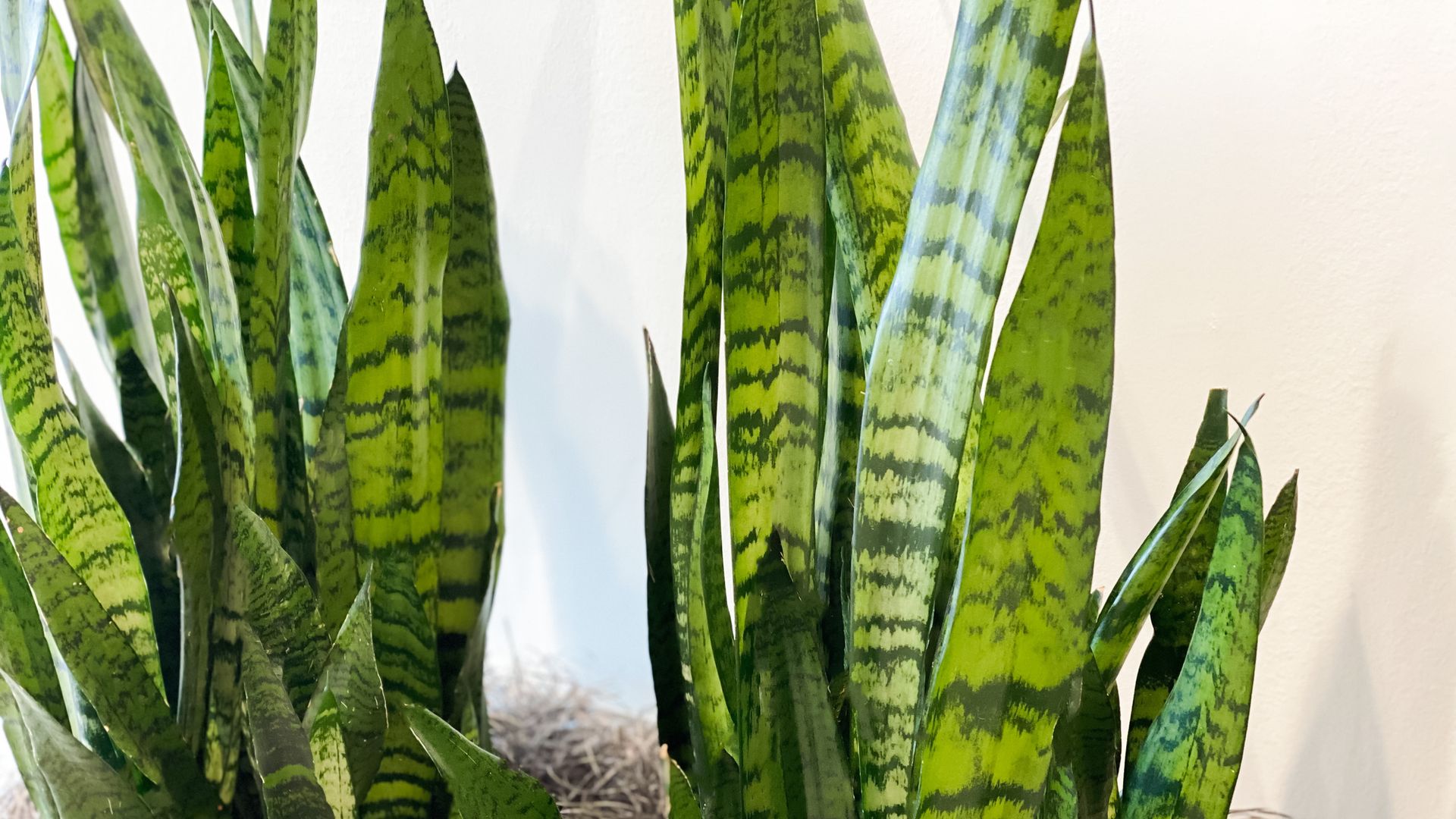
If you're on the market for a houseplant to spruce up your interiors with some colour and nature, then you might be keen to purchase one that's relatively easy to keep alive. There's a fine balance when taking care of indoor plants, as it's so easy to over-water or under-water, but thankfully, some are easier to care for than others. I've been left bitterly disappointed in the past, more times than I care to admit, upon realising I've drowned my houseplant after a little too much watering.
Sound familiar? Then you'll likely be looking for one that will stand the test of time, and the snake plant is just the ticket. They are known for being a fantastic choice for beginner houseplant owners as they're dubbed "indestructible" (otherwise known as foolproof for amateurs like me), thanks to their low-maintenance needs and easy-going tolerance to light and temperature conditions. In other words, it's pretty difficult to completely kill a snake plant!
But it's still important to consider what they do need from time to time. Here's everything you need to know about snake plants, from what they need to where to place them in your home.
How to care for a snake plant
Those who aren't experienced in taking care of indoor plants will be pleased to know that snake plants don't need constant care and assessment. What's more, the best time to grab them is October, so now is the right time to get clued up on their needs.
Light
Snake plants love and thrive in constant low light, but they can cope with a few hours of direct sunlight, too, so placing them by the window is an easy way to ensure their needs are met. However, they can also cope in the dark and with draughts, which suits UK households perfectly at this time of year when the days are much shorter. Placing them by a window or door that doesn't get streams of sunlight for hours on end will do just fine.
Water and soil
At this time of year, snake plants do not need to be fed very often at all. They hold water in their leaves, and so it's advised to only water snake plants in winter when their soil has completely dried out. When you do water them, make sure they are watered in a drainable pot and don't let them sit in the water, as this can cause root rotting. When it comes to feeding, they only need a feed once a month between April and September.
How to keep it looking its best
In addition to watering and soil care, you can make sure your snake plant is in tip-top condition by wiping its leaves with a damp cloth every so often to prevent dust build-up. It'll also mean the leaves can take in sunlight more easily and be able to photosynthesise.
They don't need misting, but try to take extra care of the tips of their leaves, and they can easily be damaged if you move your plant around a lot. Pruning the leaves of a snake plant during the growing season (April to September) will encourage further growth. Try not to prune the leaves during winter, as this will stress the plant out.
Common mistakes and how to fix them
Overwatering is a common mistake, and since snake plants don't need a lot of water, err on the side of caution, especially during winter, as they can acclimatise and get through on minimal watering during this period. An overwatered snake plant will show yellowing on the leaves.
Only water when the soil has completely dried out, and ensure the soil has been properly drained. If the plant isn't drained efficiently, it can encourage root rot, which is damaging to the plant's health.
The health benefits of snake plants
Keeping an indoor plant is great for our health. Numerous studies have shown that looking after indoor plants is a great hobby that can lower our stress levels, keep our minds focused when we're feeling stressed, and also increase our productivity.
Snake plants in particular are excellent air purifiers and can effectively remove common indoor toxins like benzene, formaldehyde, and xylene from the air. By filtering the air, snake plants are also removing allergens, creating a better sleep environment and increasing humidity.
How to propagate a snake plant
Propagating a snake plant can be done by dividing your plant, but it can also be done using leaf cutting. Cut off a leaf with a sterile tool at its base and submerge completely in water in a jar, and place it in an area where it'll get plenty of light.
It'll take some patience, but after several weeks, it will begin to grow offshoots. Once the roots are an inch long, transfer to potting soil and give it plenty of water and lots of light in its early phase until the plant is established.