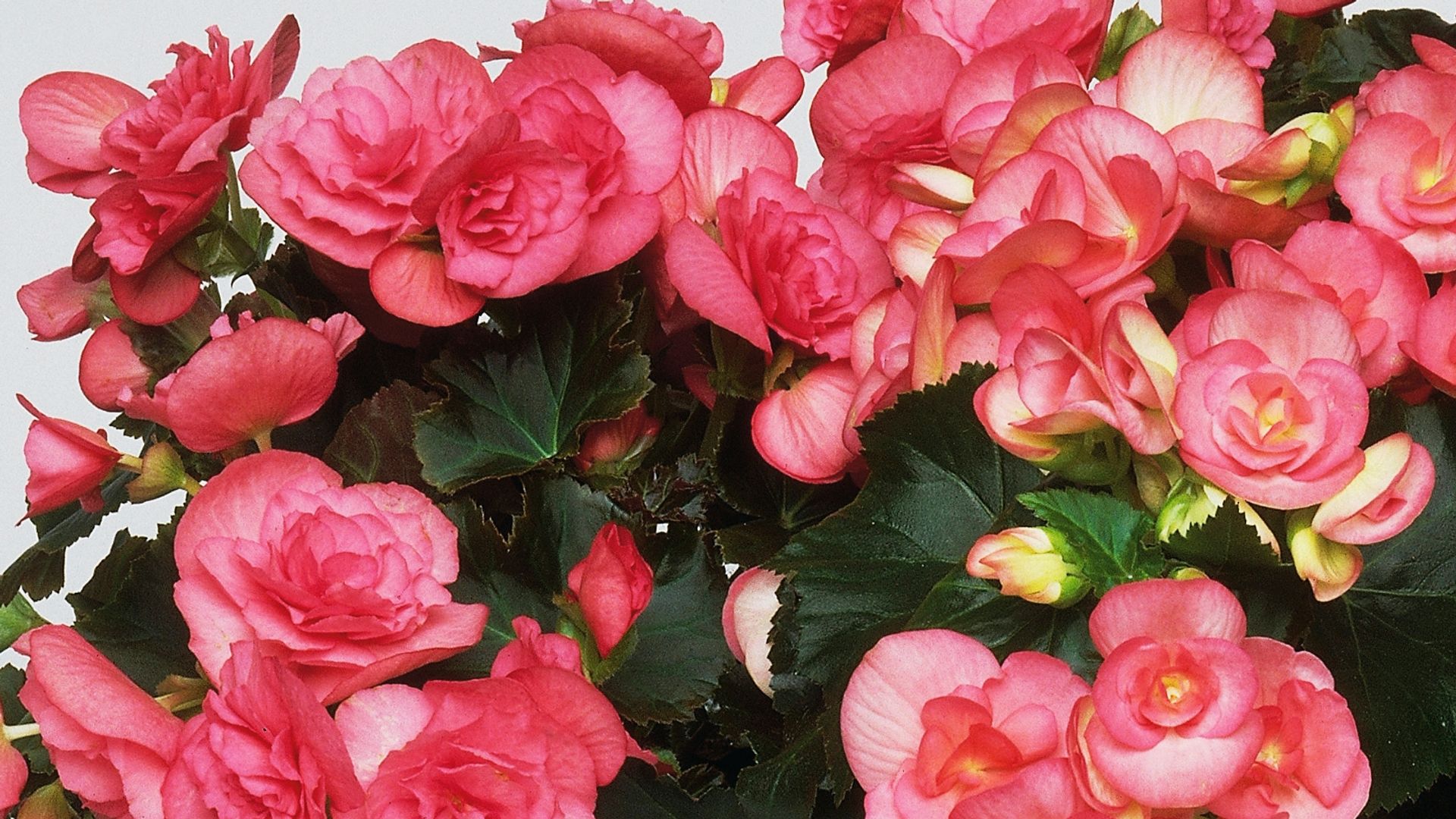
The begonia is an incredibly popular plant - likely because it's a uniquely beautiful, cheerful, and colourful hybrid species. It's suitable for indoors or outdoors and is known for its long flowering season.
Its blooms typically start to appear in spring and finish by mid-autumn, but to see those gorgeous flowers, you'll need proper care all year round and especially in winter.
Also known as the 'flower begonia', the Elatior variety is a hybrid with Brazilian lineage, and is an annual or perennial plant that develops into a small, compact shrub. Its leaves are rounded and fleshy, featuring an intense dark green colour, and its stems are covered in fine fuzz.
The plant's main appeal, though, lies in its flowers, which can be single or double and appear in a range of bright, striking colours. You can find Begonia Elatior in red, yellow, white, pink, orange and many other shades.
Here's how to support the begonia's growth so you can enjoy its charm to the absolute fullest.
Winter care: Protecting Begonia Elatior from cold temperatures
Undoubtedly, the most vital aspect of caring for the Begonia Elatior - whether indoors or outside - is ensuring it has a warm location where it can flourish. This plant simply cannot cope with low temperatures. If you reside in an area with harsh winters, you absolutely must move it indoors before the first frosts arrive.
While the plant certainly thrives best in the garden, where it usually receives more light and flowers more profusely, the essential requirement is that it is shielded from the cold. It will not survive in any spot below 12°C (53.6°F).
The temperature should be consistent, without major fluctuations; between 17°C- 23°C (62.6°F-73.4°F) is ideal for this plant. Stability is key!
Quick Tip: If the region where you live experiences very cold weather during the winter, plant your outdoor begonias in pots. This allows you to effortlessly relocate them indoors when needed.
Begonia light requirements: Ideal placement for maximum flowering
If you're growing the begonia indoors, place it in a bright spot, for example, near a window, ensuring it receives plenty of natural light; indirect light is always best.
In favourable conditions - that is, in warm climates with mild temperatures - the begonia is a perfect outdoor plant. It thrives in the open air and natural light, which is essential for encouraging it to flower and thrive.
Outdoors, it's best to avoid placing it in full, direct sun, particularly if you live in a region that experiences very hot weather. It's much better to position it in semi-shade so the sun's rays don't scorch the leaves directly.
Watering Begonias: Tips to avoid waterlogging
Providing the correct amount of water is one of the most essential care requirements for your Begonia Elatior, both in summer and winter.
During the warmest months, you'll generally need to water your begonias two or three times a week. In winter, though, watering should be reduced: once a week, or twice at the very most, will suffice.
It's most important to avoid waterlogging (or 'soggy roots'), as it's highly detrimental to the plant - begonias are very susceptible to root rot. To prevent overwatering, always check the compost and only water once it feels completely dry.
Begonias thrive in environments with high air humidity, but it's generally not advisable to mist the leaves and flowers directly with water.
Quick Tip: Place a saucer filled with pebbles and a little water underneath the pot. As the water evaporates, it will create humidity without the water coming into direct contact with the roots.
Fertilising Begonias: Why acidic substrate and perlite are key
The Begonia Elatior, like all other plants belonging to the Begoniaceae family, prefers acidic compost (or growing medium). It grows robustly and without issue in this type of soil.
Regarding feeding, a specific fertiliser for acid-loving plants applied after the main blooming period works wonders. Furthermore, if you mix the compost with perlite, you will significantly improve the soil's drainage, helping to prevent the plant from becoming waterlogged.
Pruning Begonia Elatior: Trimming for health and shape
If you give your begonias an occasional light prune to remove spent flowers and damaged stems, you will significantly boost both their health and future flowering. You can also give them a more extensive shaping prune once the main flowering season is over.
Any leaves that have dried out - be it due to summer heat, age or another reason - should be carefully cut away using disinfected scissors. Any other damaged foliage should also be trimmed off.
Common Begonia pests and diseases: Identifying and treating fungi
One of the most frequent issues affecting begonias is overwatering, which encourages not just root rot but also fungi. These fungi are highly detrimental to the health of your begonias, causing common problems such as powdery mildew and grey mould (or Botrytis).
Both powdery mildew and grey mould result in spots appearing on the leaves, stems and flowers. Powdery mildew spots are characteristically white or grey, while grey mould spots appear greenish grey. To tackle these diseases, it is essential to cut away the damaged plant material and apply a suitable fungicide treatment.