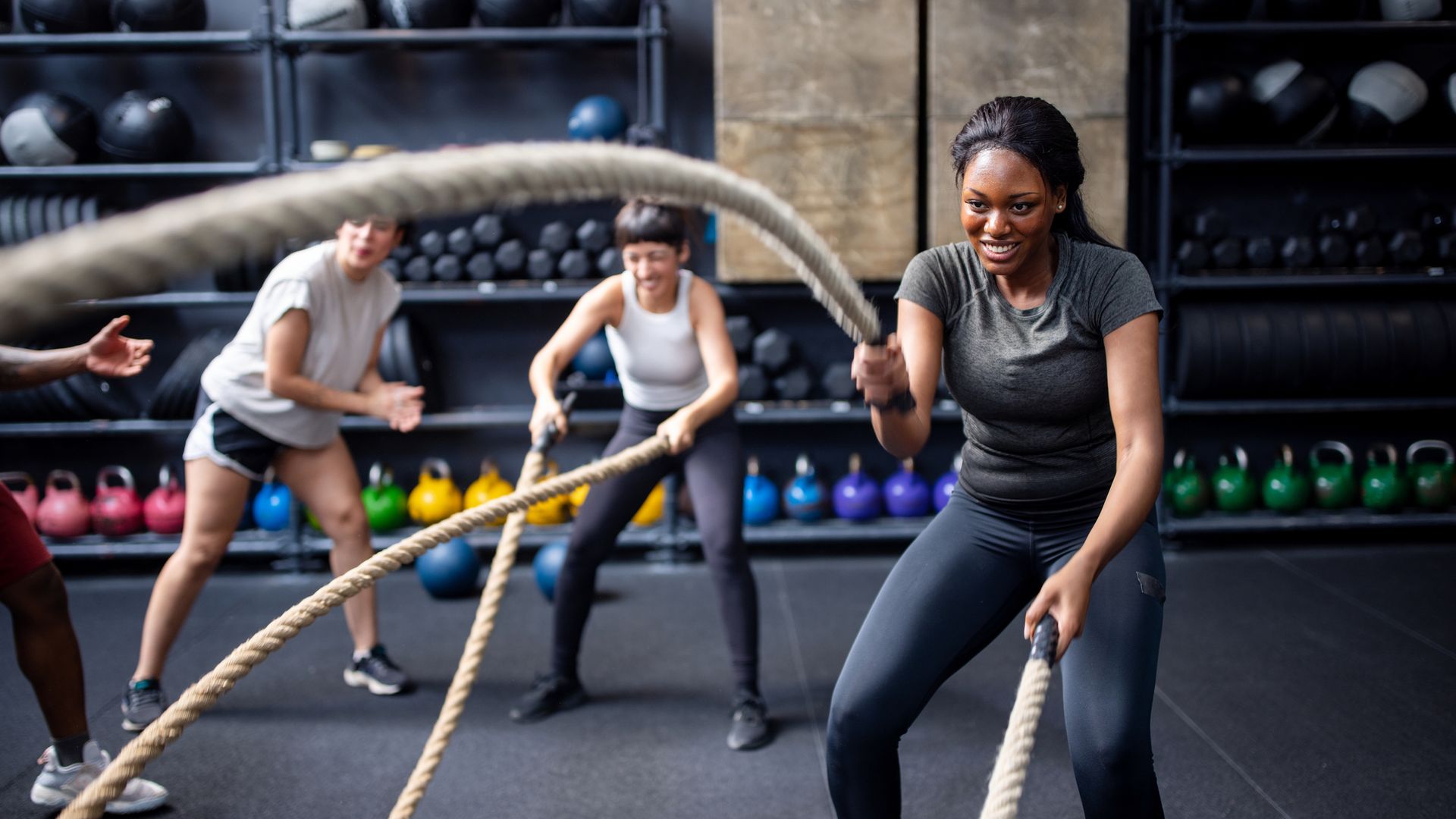
For those on a weight loss journey, it can be difficult to navigate the plethora of advice online. With fitness experts, influencers, and enthusiasts sharing their opinions and workout routines, it can often feel overwhelming and difficult to tailor the advice to your own situation. Many will recommend HIIT workouts, an increasingly popular form of exercise taught as part of a class at many gyms, heralding it as the answer to all your prayers – but are HIIT workouts all they are cracked up to be, and can this type of workout sabotage your weight loss progress?
First things first, for those unfamiliar with this mode of exercise, let us get an expert's opinion from a qualified personal trainer and founder of the Power of Mum fitness app, Nicole Chapman. "A HIIT workout stands for high-intensity interval training. In simple terms, it's short bursts of challenging exercise followed by brief periods of rest or lower-intensity movement (active recovery)," Nicole explains.
"For example, you might do 30 seconds of squat jumps, rest for 15 seconds, then move straight into push-ups. The idea is to work hard in those intervals, then recover just enough to go again. HIIT can be a time-efficient form of training - you can get an effective workout done in 20-30 minutes without needing fancy equipment. It also delivers both cardiovascular and strength benefits in one workout, making it an effective way to improve overall fitness."
When it comes to losing weight, there is value in the HIIT approach. "HIIT supports weight loss by helping create a calorie deficit, the key driver of fat loss," Nicole says. "Research shows it can be just as effective as longer, steady-state cardio (such as jogging, cycling, or using a cross-trainer at a consistent pace) for reducing body fat - but in far less time."
Nicole goes on to highlight that a 2017 study compared HIIT with this type of training in overweight adults and found both reduced body fat and waist circumference, but HIIT achieved these results in about 40 per cent less total exercise time. "This makes HIIT a time-efficient strategy, especially when combined with strength training to build lean muscle and support long-term health," she says.
Recommended videoYou may also likeWATCH: Five fitness-obsessed A-listers who bring their A-game in the training room
How long before you see results with HIIT workouts?
HIIT can support weight loss by helping create a calorie deficit
The personal trainer tells us that if you enjoy HIIT, two to three sessions a week are plenty alongside other movement and some strength training. "For weight loss, the NHS and most health bodies recommend aiming for around 0.5-1kg (1–2lb) per week - anything faster can be hard to sustain," Nicole says. "Because HIIT is demanding, recovery is just as important, and doing it every day can increase injury risk, especially as it places a lot of impact on the joints."
Nicole says that's why low-impact versions like cycling intervals, rowing, or bodyweight moves without jumping can be a great alternative if you want intensity without the heavy impact on your joints. "In terms of results, most people start to feel fitter and notice changes in energy within two to four weeks, but visible fat loss depends on maintaining a consistent calorie deficit and finding a routine you actually enjoy and can stick to."
Nicole says HIIT isn't a magic formula to achieve weight loss goals
Nicole answers the questions we all wonder when we watch others bossing an intense HIIT workout – does it actually work? "HIIT can be effective, but it's not a magic formula, and if done wrong, it may even slow progress," Nicole warns. "One issue is relying on HIIT alone; it burns calories, but without strength training, you miss out on building lean muscle, which boosts metabolism and supports long-term fat loss. Strength work also supports bone health - something I’ve come to prioritise more as I navigate perimenopause.
"Another danger with HIIT is putting speed over form," she adds. "Form simply means maintaining good technique and posture in a movement, for example, keeping your chest lifted in a squat or bracing your core in a plank. When form slips, the risk of injury rises, and so does the chance of results stalling." The temptation to overdo it when it comes to a HIIT workout, even if you enjoy it, can also become a pitfall.
"Because it's so intense, too much can lead to fatigue, burnout, or even increased hunger, which makes consistency harder. And finally, no form of exercise can override nutrition - a calorie deficit is still essential for fat loss," she highlights.
Nicole says relying on the scales can sabotage weight loss progress
With weight loss generally, Nicole also reminds us that relying only on the scales can sabotage your progress. "Exercise and nutrition may be working - you might be losing fat and building lean muscle, but the number on the scale doesn't always reflect those changes," she reveals. "This can be discouraging and lead people to give up too soon, even though their body composition and health are improving in exactly the way they want.
"The key is balance: combining HIIT with strength and low-impact cardio, working on nutrition, allowing recovery, and measuring success beyond just the scales. For parents, September is the perfect time for a reset as routines settle, but don’t overcommit - start small, build gradually, and your results will be far more sustainable."
Transform your routine with expert advice from our beauty and wellness team
By entering your details, you are agreeing to HELLO! Magazine User Data Protection Policy. You can unsubscribe at any time. For more information please click here.