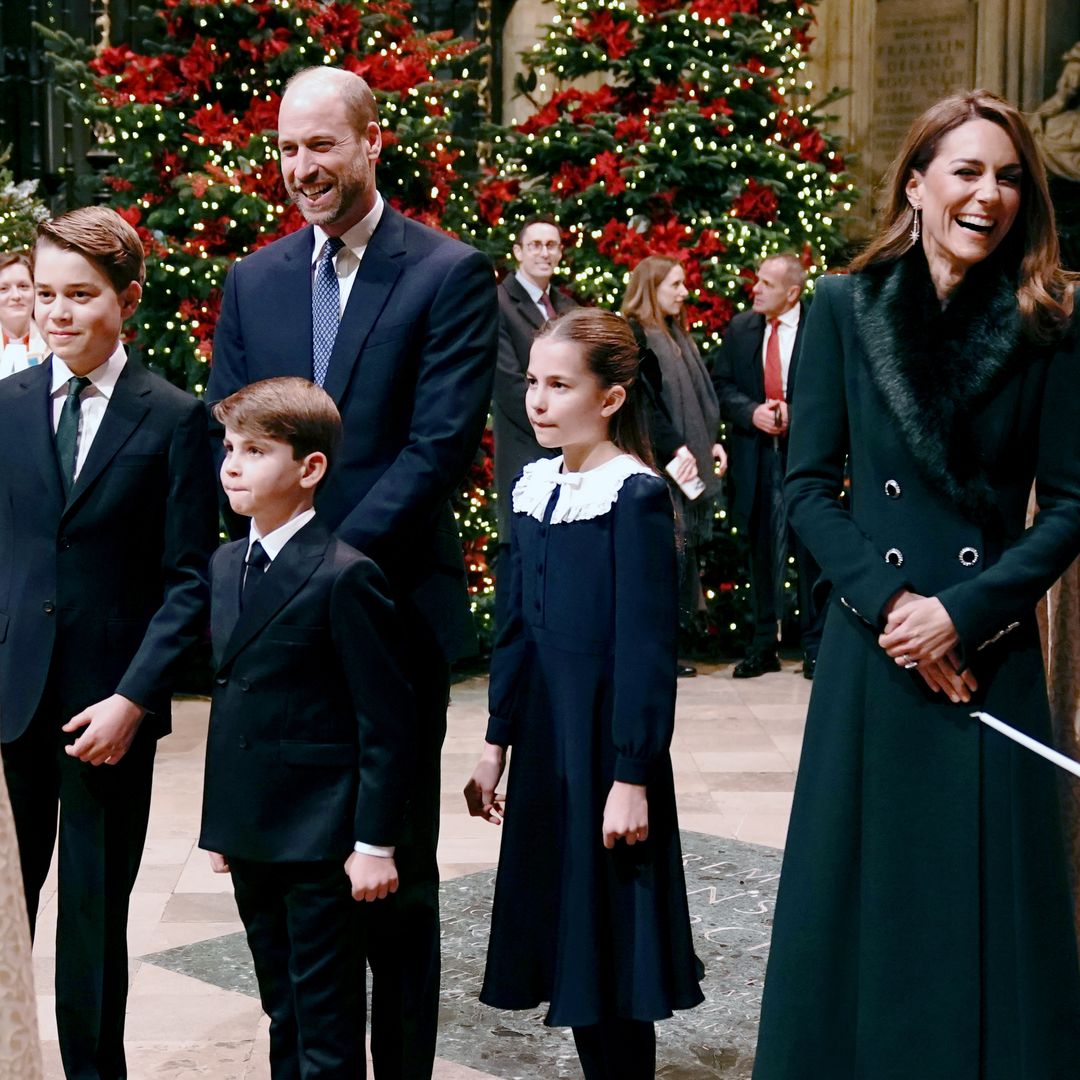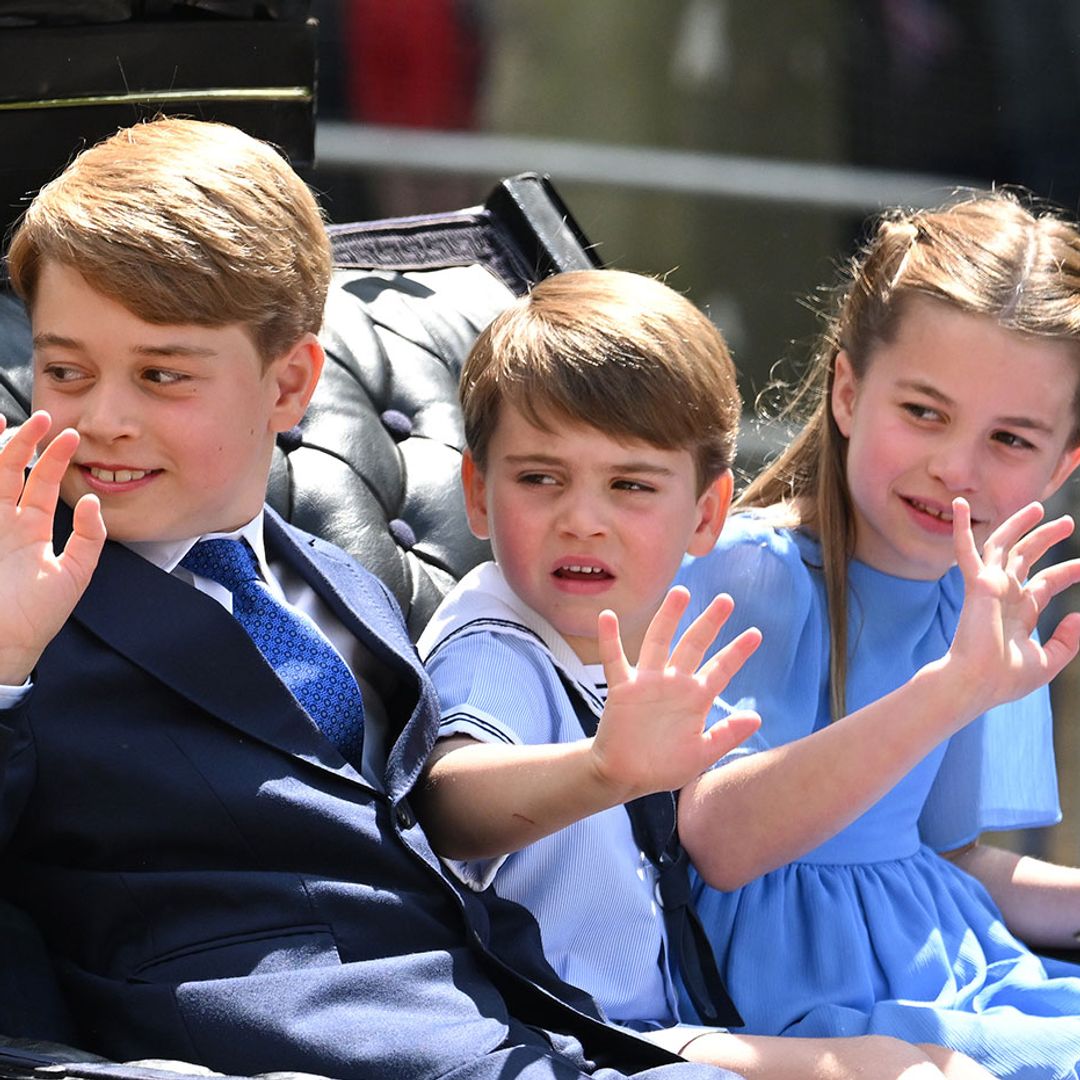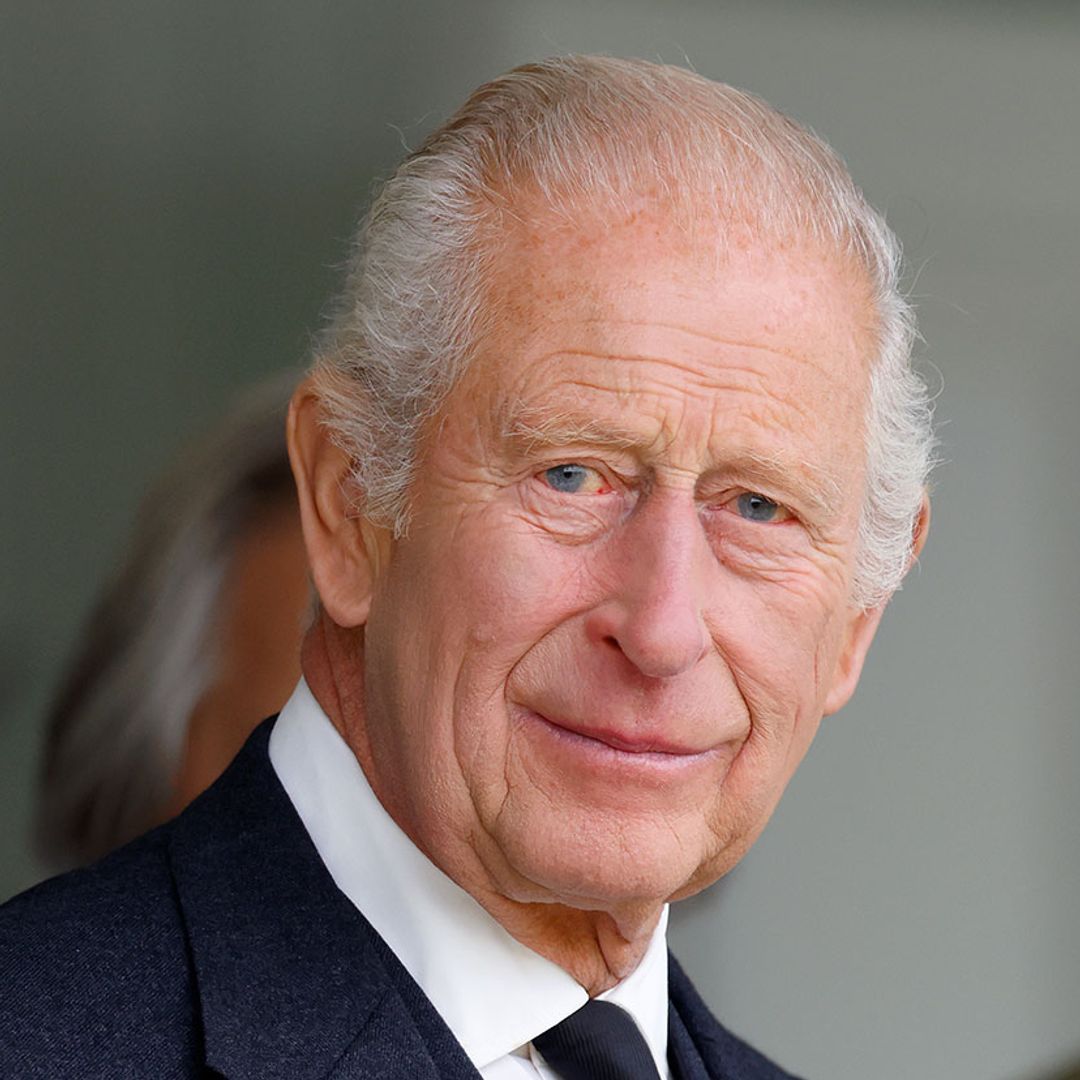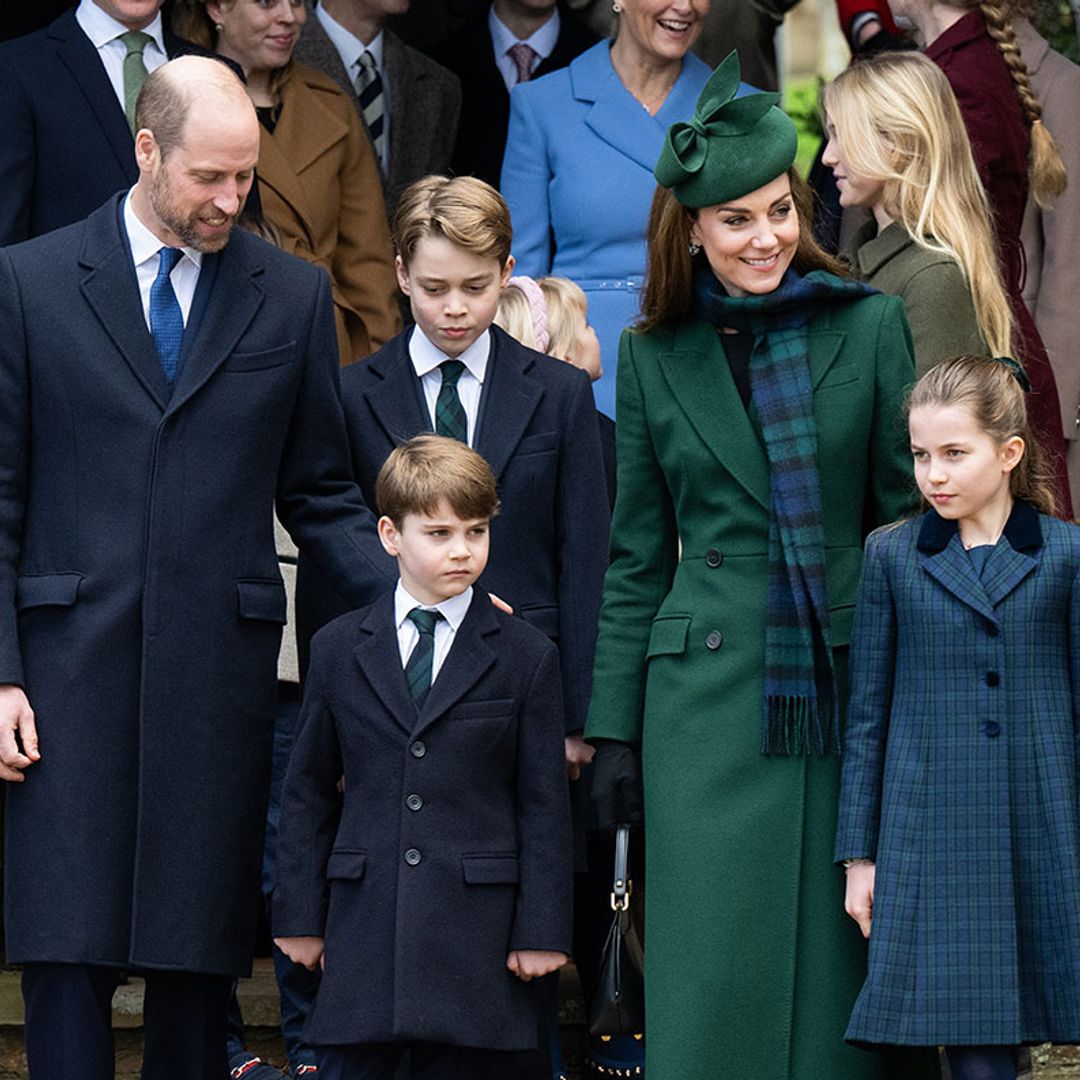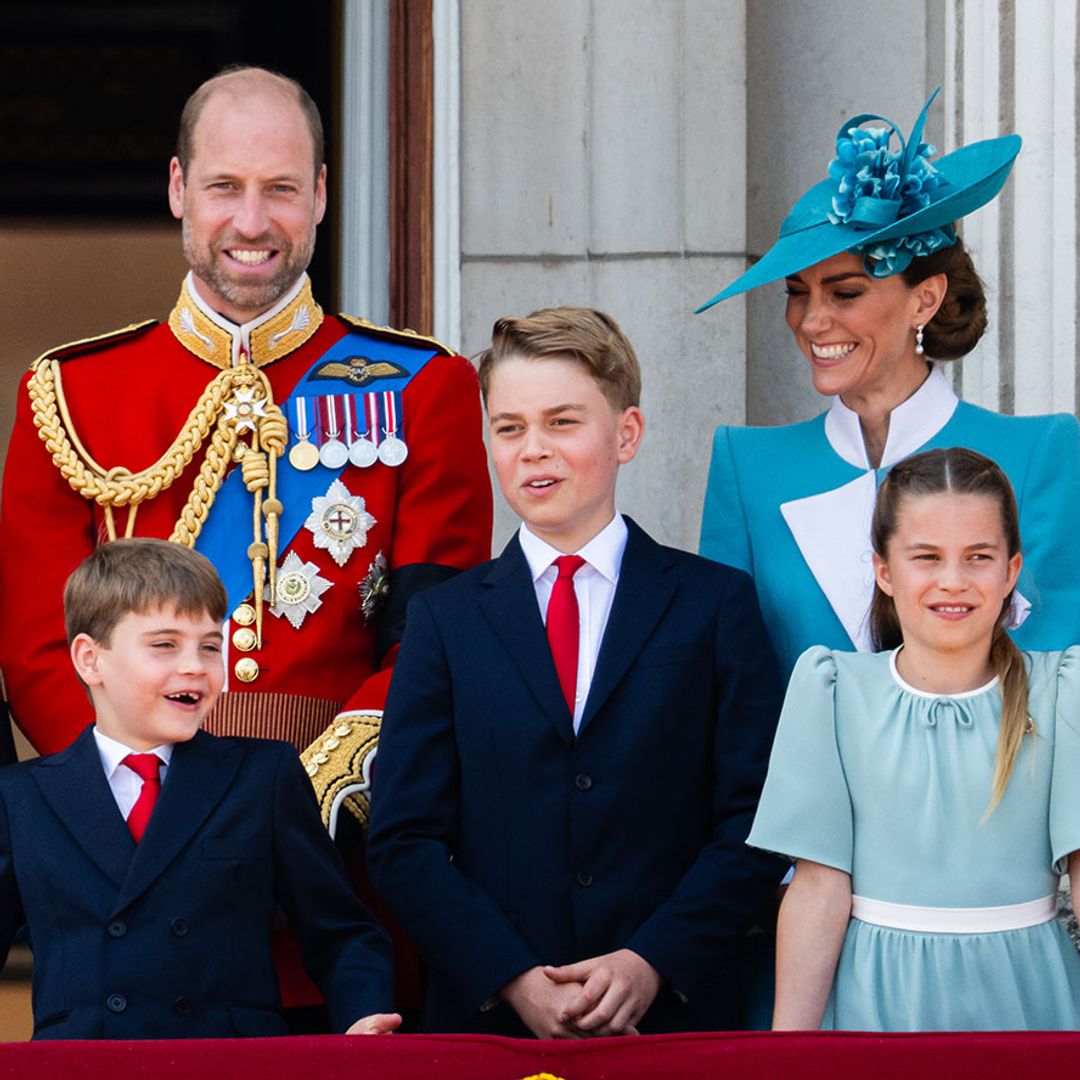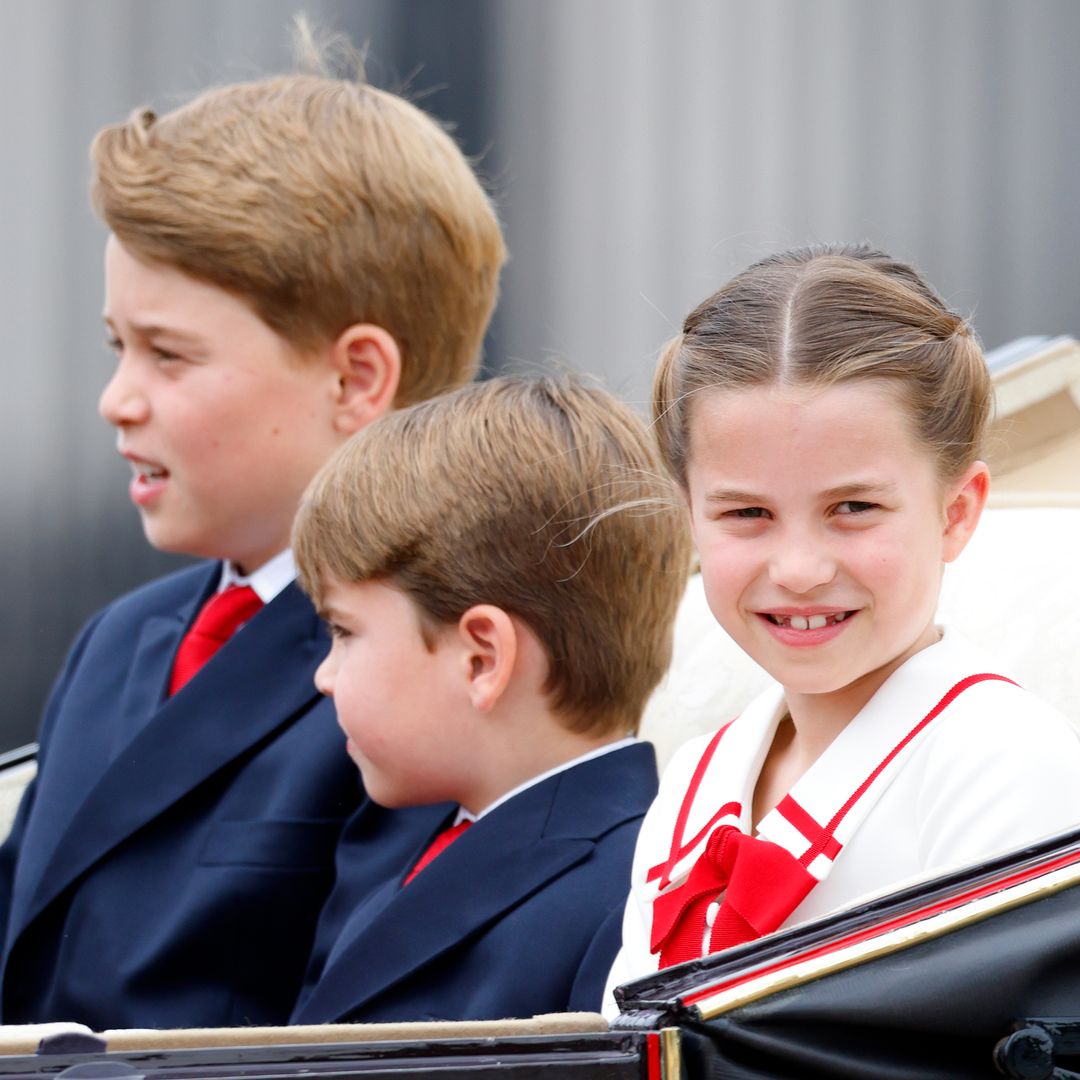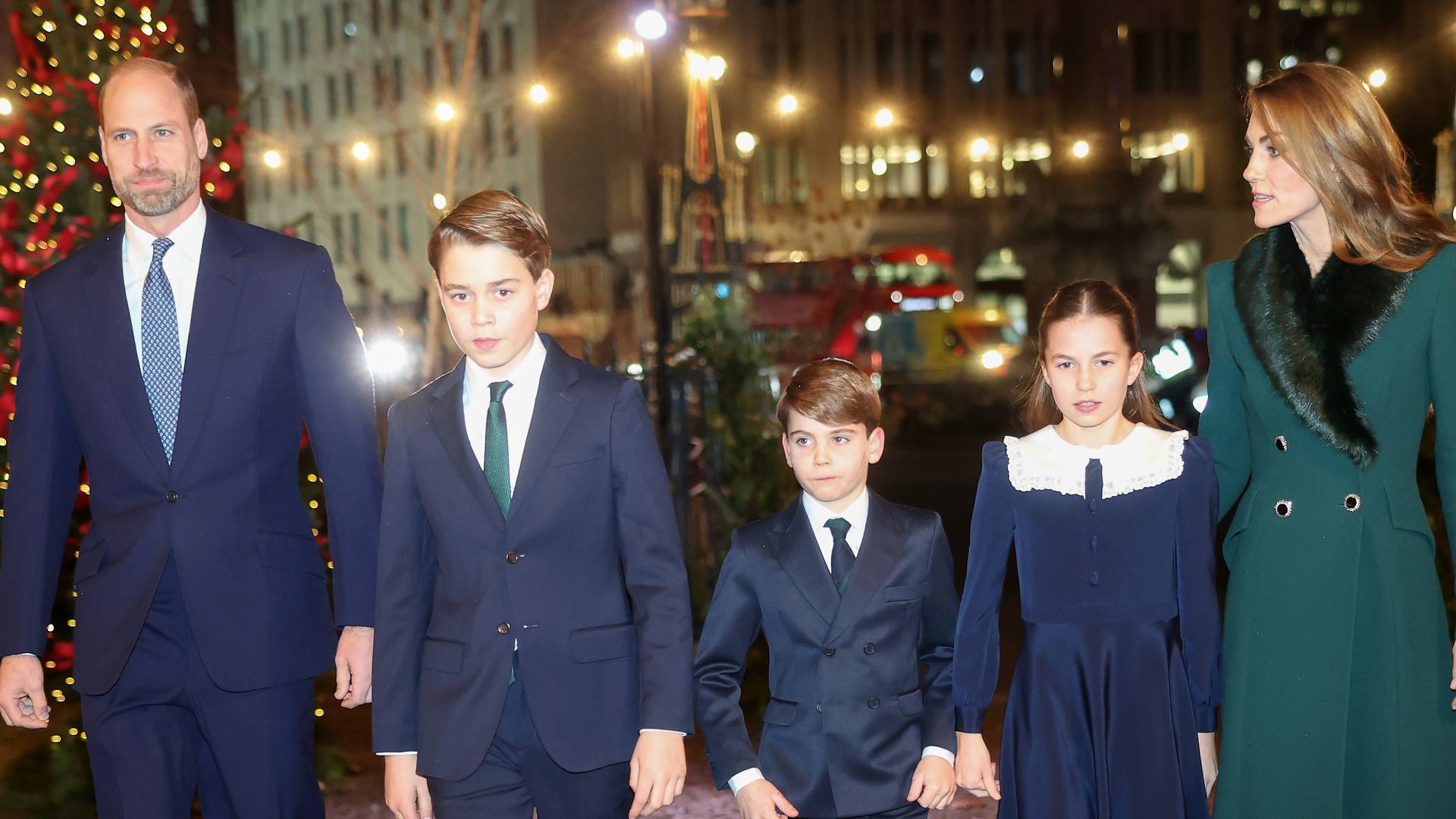

Once the Prince and Princess of Wales have joined members of the royal family for the annual walkabout at Sandringham, their Christmas Day is all about their three children, even if that means indulging their three children, Prince George, 12, Princess Charlotte, 10, and Prince Louis, seven - even if that means indulging them in a tradition that will keep them up past their bedtime.
Speaking to Barry Alston on the Royal Marsden London Hospital's radio station from the Waleses' then-home at Kensington Palace in 2021, Prince William, now 43, answered questions from children, including one from a little boy called Henry.
 © Getty Images
"I like board games. What is your favourite board game?" Henry asked the prince, to which William replied: "Henry, we're playing board games with the children quite a lot. We love Monopoly, that's good, and Risk. Have you played Risk before? That's a good game, goes on for hours and usually everyone gets very cross because they lose. But that's what I like playing."
What are the Wales family's favourite board games?
William revealed that Monopoly and Risk go down a treat in their house on Christmas Day, which happens to be Sandringham House in Norfolk, where the family of five usually joins King Charles and Queen Camilla.
Invented by Charles Darrow in 1935, Monopoly is the popular real-estate board game where players compete to become the wealthiest by selling, buying, and trading properties. It has since been turned into a game on Nintendo Switch and a game for iPhone.
Meanwhile, Risk has been around since 1957 and involves two to six players who try to control the world map by deploying armies, attacking territories, and eliminating their opponents.
Why are board games helpful for children?
Board games are a tried and tested way to get the family together at Christmas, but they have more benefits for children than just being a bit of fun. Dr Sasha Hall, a HCPC-registered senior education and child psychologist, tells HELLO! that socially, games support skills such as turn-taking, waiting, negotiating and coping with winning and losing, all of which underpin healthy peer relationships.
 © Getty Images
"Emotionally, children are practising managing frustration, disappointment and excitement in a safe, contained setting, with trusted adults modelling calm emotional regulation when games become tense," Dr Sasha tells us.
"Cognitively, board games support planning, problem-solving, flexible thinking and understanding cause and effect, as children learn that their decisions have consequences over time."
 © Getty
Dr Sasha also emphasises that the choice of game also matters developmentally. "Strategy-based games such as Risk place heavier demands on planning, strategic thinking and foresight, while also drawing on working memory and perspective-taking as children anticipate others’ moves," she tells us.
"Perhaps most importantly, playing together creates opportunities for shared attention, laughter and connection, helping to strengthen family bonds and positive memories around learning and play."
Uniting the royal family at Christmas
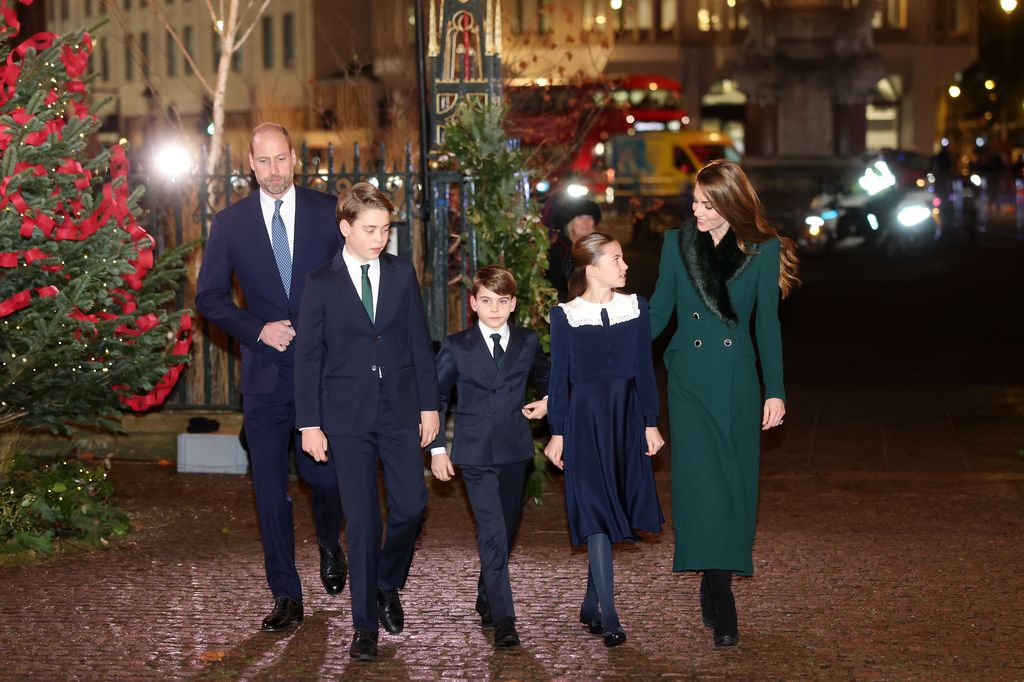
A sense of togetherness is certainly important to William at Christmas. He revealed on Barry Alston's show: "Bringing the family together at Christmas time is always lovely because we're quite spread out, doing our thing during the year, so we get very few moments to actually come together.
 © Samir Hussein
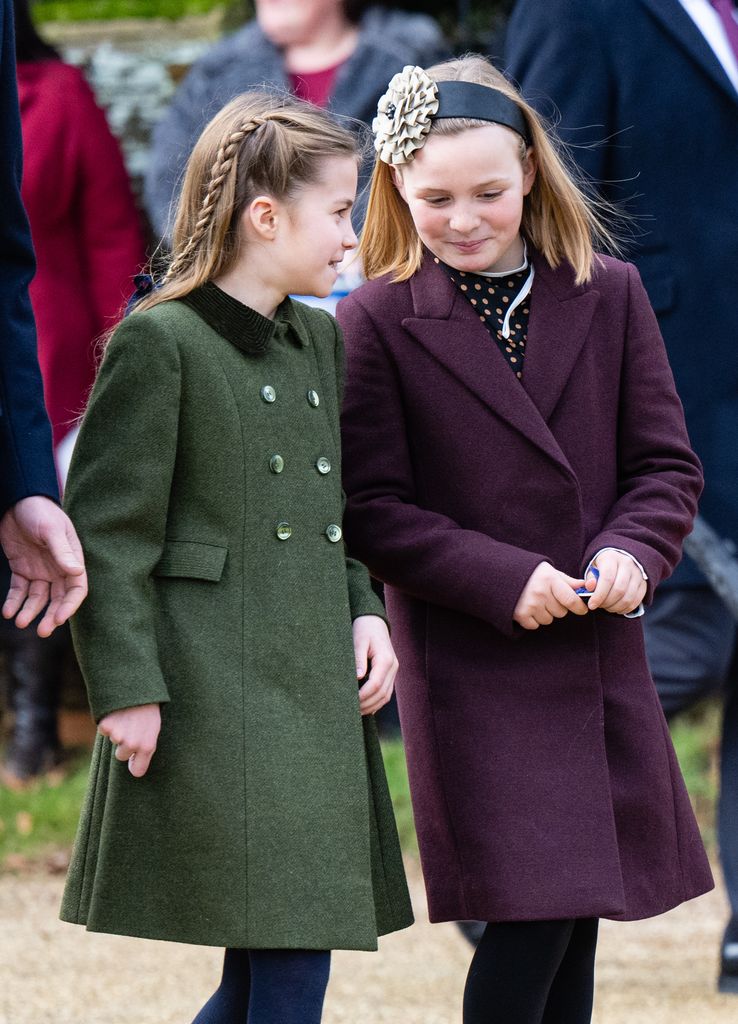
"When I see my children meet up with my cousin's children and they all have a wonderful time playing together, it's very special."