
Grabbing a quick bite at the kitchen counter, finishing lunch while pacing between meetings, or eating straight from the fridge's shelves - sounds familiar, right?
In a culture obsessed with productivity, sitting down to eat can feel almost indulgent, despite what our mothers may have drilled into us growing up.
However, the simple act of standing while you snack or dine could actually influence your health. From digestion and blood sugar to stress and satiety, researchers and nutrition experts are taking a closer look at how posture at mealtimes might matter more than we think.
To figure out the correct way to eat, HELLO! asked the experts to break down the science so we can finally understand whether eating on your feet is a smart habit or one best left behind.
Can I eat while standing?
As the world gets increasingly busier, so do our schedules, and you would be forgiven for consuming the odd meal on the go. But how is this affecting your body's ability to digest and process food?
According to the experts, it is more about how mindful you are while you are eating than about whether you are sitting or standing up while doing so.
One of the UK's leading nutritionists and Sunday Times bestselling author, Rhiannon Lambert, explained why our eating habits are critical.
The nutritionist and founder of the Rhitrition Clinic told us: "There’s nothing inherently harmful about eating while standing, and for many people it’s simply part of daily life, especially during busy work days or social events.
"From a nutritional perspective, standing versus sitting isn’t a 'good or bad' issue. What tends to matter more is how aware you are while eating, how quickly you eat, and whether the meal feels rushed or distracted."
Rhiannon continued: "If standing occasionally fits your routine, that’s absolutely fine. Discomforts and problems may be more likely to arise when meals are consistently hurried or eaten without much attention, regardless of posture!"
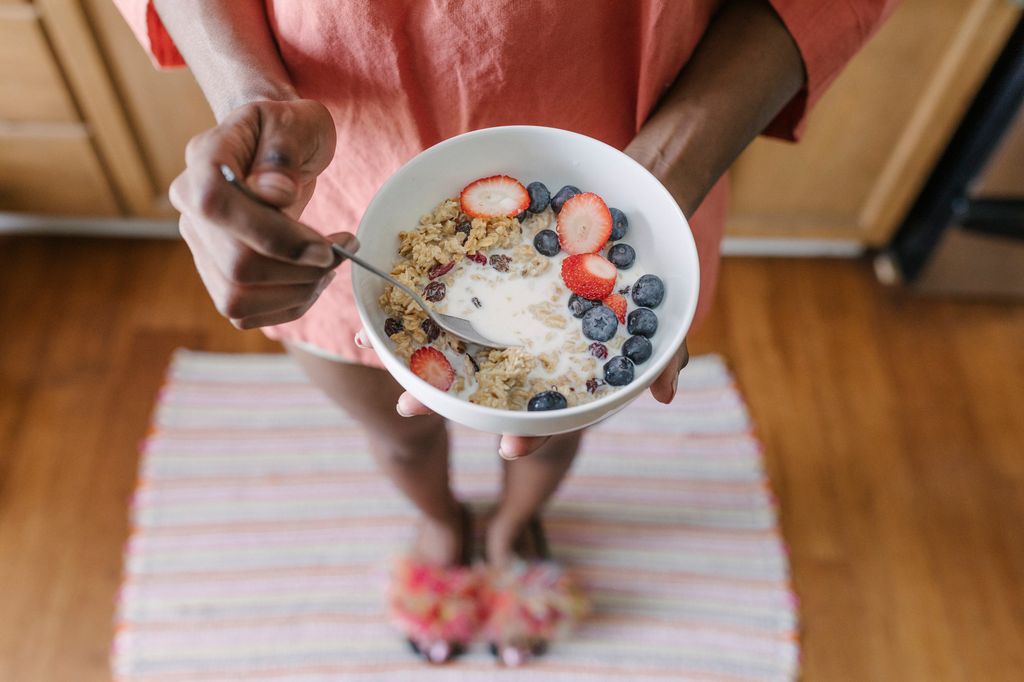 © Getty Images
Does eating whilst standing help digestion?
Ultimately, it is poor digestion that will leave you feeling sluggish and bloated, so how we eat our meals to prevent that from happening is important.
I know for myself, if I rush through meals and overeat, I will feel the consequences for much longer than the time it saved me to wolf down my food so I could get back to whatever I was doing before.
So does standing impede our digestive system, or is it just another old wives' tale? "Digestion is primarily influenced by factors such as the type of food eaten, chewing, meal size, stress levels and overall gut health," Rhiannon outlined.
She added: "Some people may feel more comfortable eating upright, whether sitting or standing, compared to slouching, as this can reduce sensations like reflux or discomfort.
"However, standing itself doesn’t appear to enhance digestive processes, and for some people, eating in a relaxed seated position may actually feel better."
How does eating posture affect digestion, portion control, and nutrient absorption?
Getting into the science of how we eat our food, there are a few aspects that need to be considered when determining whether standing is a harmful or helpful way to eat food: digestion, portion control and nutrient absorption.
Rhiannon said: "Posture can influence aspects of digestion, particularly gastric emptying. There is some research to suggest that eating in an upright position, compared with lying down, may allow food to leave the stomach more efficiently, which may affect the timing of nutrient appearance in the bloodstream.
"However, in everyday eating, nutrient absorption itself occurs later in the digestive tract and isn’t meaningfully altered by whether someone is standing or sitting."
The expert continued: "Where posture may have an indirect effect is through eating behaviour. Standing meals are often eaten more quickly and with less awareness, which can make it harder to notice hunger and fullness cues.
"Over time, this may influence portion control for some people. Sitting down, slowing the pace of eating and minimising distractions can support better awareness of satiety (fullness) signals, but this isn’t exclusive to sitting. You can eat mindfully while standing, just as you can eat mindlessly while seated."
 © Getty Images
Does standing change calorie intake or eating speed?
At first glance, eating while standing might seem like nothing more than a minor lifestyle quirk, but the position you eat in could subtly start to change how much and how fast you consume your meals.
Does being on your feet make you rush through meals or curb mindless snacking, or could it actually lead to overeating without realising it?
The expert weighed in and revealed: "In everyday settings, standing meals are often more informal and may be eaten more quickly or alongside other activities, which can make it harder to tune into hunger and fullness cues.
"However, this isn’t necessarily always true, and standing itself doesn’t automatically lead to overeating or undereating. Research doesn’t consistently show that standing increases overall intake, and responses appear to be highly individual."
She went on to add: "For some people, eating while standing may reduce appetite slightly in the short term; for others, it makes little difference. Overall, factors such as eating speed, distraction and meal composition are likely to have a much greater influence than posture alone."
 © Adam Brazier
Rhiannon Lambert is a Registered Nutritionist, founder of Rhitrition, a three-time Sunday Times bestselling author and co-host of The Wellness Scoop podcast.