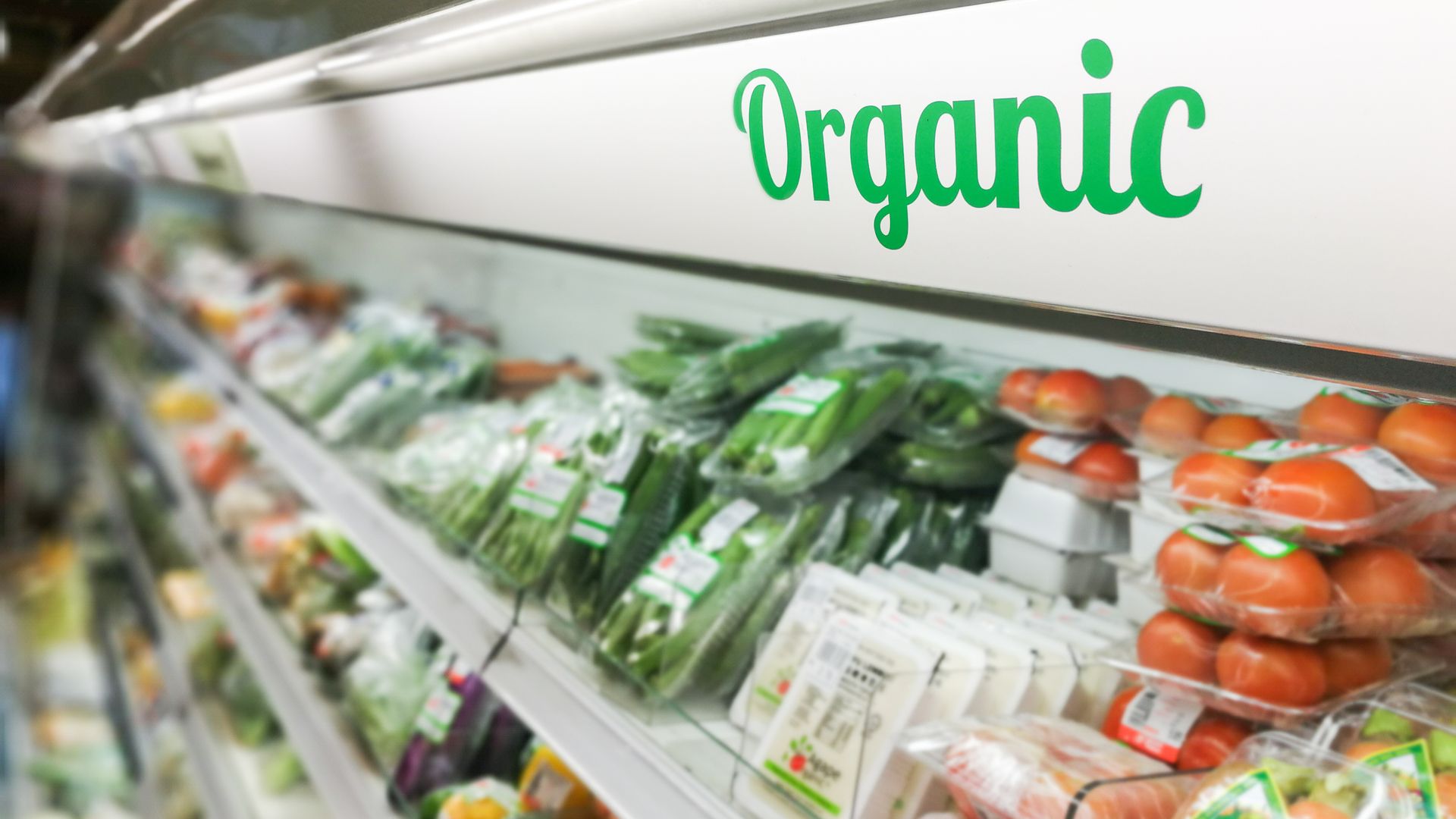
With food prices continuing to climb, many of us (myself included!) are asking - is buying organic really worth it? And if so, which foods actually make a difference to our health? I'm a nutrition, health and wellness coach, but even I like a little clarification sometimes. To help assess what the difference actually is between organic and non-organic food, along with the ones worth paying for, I spoke to a doctor for a practical, evidence-based verdict. Thankfully, supporting your health doesn't require doubling your food shopping bill on exclusively organic foods; these are the ones to prioritise paying more for - even when your budget is tight.
What are organic foods?
From meat to fruits and vegetables, there are lots of organic foods available in the supermarket, but there are some misconceptions about what the term organic actually means, according to Dr Daniel Atkinson, Clinical Lead at Treated.
"A common misunderstanding is that organic foods are pesticide-free, but this isn't necessarily true. Organic foods may contain pesticides, but the amounts are often smaller or naturally derived. For nutritional value, organic foods generally have a higher content than non-organic foods, but this doesn’t mean that non-organic foods don’t have nutritional value," he says.
"It’s also important to look at the organic label on food products. According to the U.S. Department of Agriculture, "'100% organic' refers to a fully organic product, but if it simply says 'Organic', that typically means 95% of the ingredients are organic."
Which foods should you only buy organic, and why?
Organic foods can cost considerably more than their non-organic counterparts, so for many of us, it is unrealistic to consider upgrading all of our fresh produce. However, there are some that are particularly worth swapping, according to Dr Atkinson.
"It’s good to buy organic fruits and vegetables where you’ll eat the skin, such as strawberries, peaches, spinach, or apples. This is because pesticides can remain on the outer skin even after cleaning it," he recommends. "From this perspective, foods with a thick non-edible skin, such as bananas, avocados, or oranges, might be less worthwhile buying organic, as they already have a natural protective outer layer."
The doctor adds: "Animal products, like eggs, meat, and fish, might also be worth buying organically. This is because synthetic growth hormones, antibiotics, and certain feed additives are often used during farming, which might affect their nutritional value. Additionally, people who are more concerned with the welfare of livestock might gravitate towards organic animal products that are more ethically and sustainably produced.
"Another significant factor is that organic foods tend to be more expensive. 'Regular' foods are still regulated and have to meet certain standards before they’re made available for sale."
The Dirty Dozen
One way to consider what foods you should prioritise buying organic is to look at the Dirty Dozen list, published by PAN UK. This list features fruits and vegetables most likely to contain residues of two or more pesticides, which may have an impact on health. See the most recent list below, along with the percentage of samples tested which were found to have multiple pesticide residues.
- Peaches and Nectarines - 85%
- Grapes - 84%
- Strawberries - 83%
- Cherries - 81%
- Spinach - 73%
- Apples - 72%
- Brussels Sprouts - 50%
- Cucumber - 47%
- Tomato - 46%
- Apricots - 43%
- Lettuce - 39%
- Beans with pods - 38%
The Clean Fifteen
If you're on the hunt for the foods with the lowest amounts of pesticide residues, the Environmental Working Group (EWG) has published the Clean Fifteen:
- Pineapples
- Sweet Corn, fresh and frozen
- Avocados
- Papaya
- Onion
- Sweet Peas (frozen)
- Asparagus
- Cabbage
- Watermelon
- Cauliflower
- Bananas
- Mangoes
- Carrots
- Mushrooms
- Kiwi