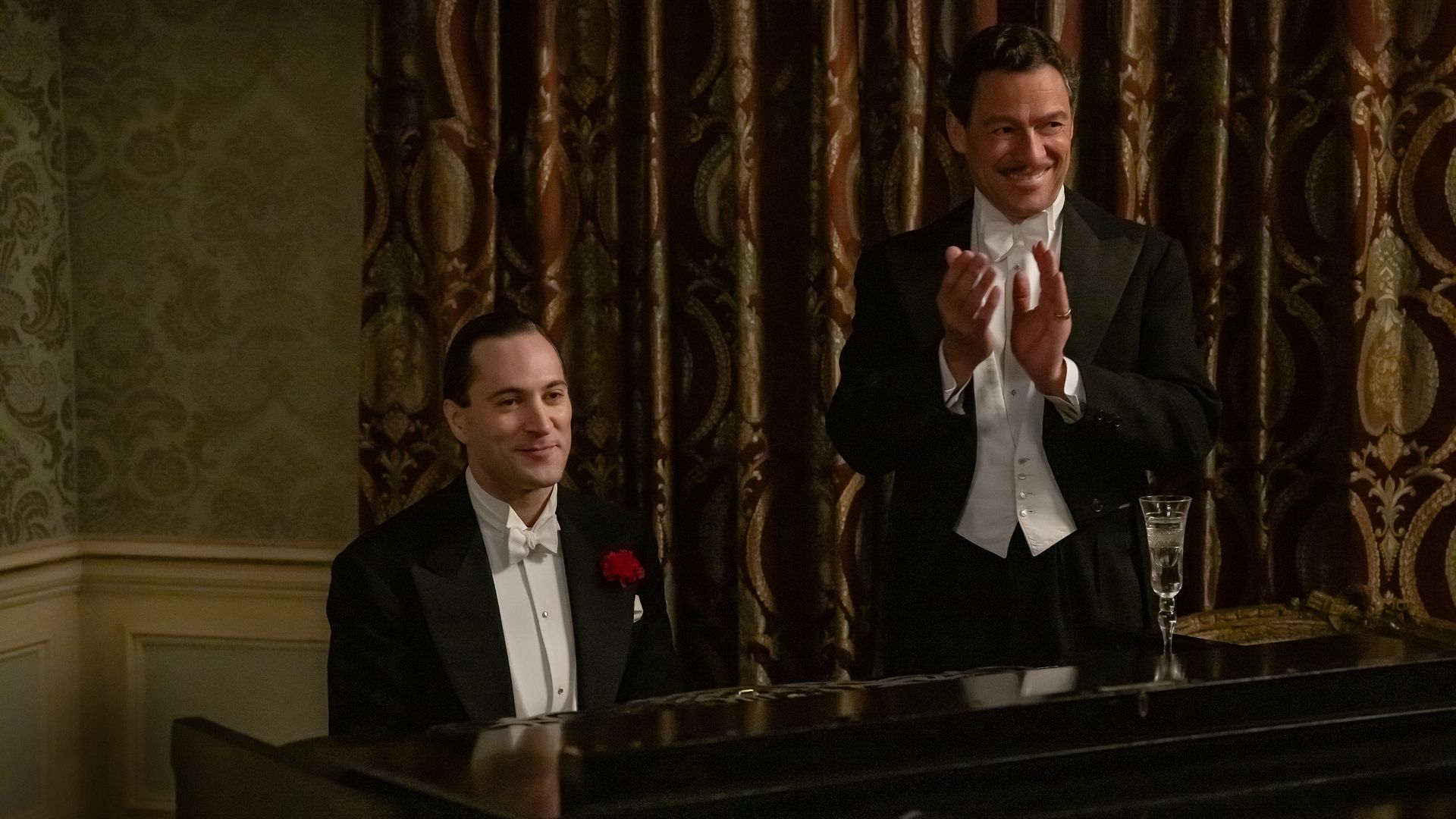
Downton Abbey: The Grand Finale was released on 12 September to glowing reviews for the "tear-jerking" big screen farewell. Viewers have been captivated by the breathtaking scenery, grand hallways, and stunning shots on the ITV period drama over the years. While Downton Abbey is, of course, fictional, the popular period drama was primarily filmed at Highclere Castle in Hampshire, England. Owned by Lord and Lady Carnarvon, the historic 5,000-acre estate in Hampshire played host to the Crawley family's ups and downs across six series and two films. Showrunner Julian Fellowes, a friend of the couple, had Highclere in mind when he wrote the script - and the Carnarvons let the stars have free rein of their 275-room home, complete with antique furniture, artefacts and paintings.
"Everything we have is in character, so you hardly need any props," Lord Carnarvon told HELLO! during our exclusive photoshoot and interview. "It's about respecting the heritage, and reflecting on what this house means to people. We are just stewards in our lifetime. It goes on. Coming to a house like his, you can look backwards, and dream of looking forwards," Lady Carnarvon explained.
But it's not just Highclere that Downton Abbey has used as its beautiful backdrop. Have you ever wondered where the franchise is filmed? The show also featured several picturesque locations across Britain, including the village of Bampton in Oxfordshire and Basildon Park in Berkshire as the Crawleys' London home, Grantham House. We’ve done some digging and here's everything you need to know about where Downton Abbey was filmed...
Highclere Castle is famous for its appearance in the franchise
Highclere Castle
The most famous filming location is Highclere Castle, which is now known as the eponymous Downton Abbey. The Grade I-listed building is in the beautiful Hampshire countryside, about 70 miles outside London. The castle was largely renovated during the 1980s and its garden was designed by Capability Brown, a gardener and architect known for shaping much of England’s landscape. Both exterior and interior shots were filmed on location at Highclere, with the great hall, dining room, library, music room, drawing room, salon and some of the bedrooms all regularly appearing on the show. The kitchen, servants' quarters and working areas were constructed and filmed at Ealing Studios, however. Well loved films like Bridget Jones, Shaun of the Dead, St Trinian’s, Notting Hill, The Darkest Hour and Back to Black were all shot there too.
Who knew you could visit the Crawleys' London residence, Grantham House? National Trust estate Basildon Park, near Reading, was at high risk of demolition but was luckily revived. According to the charity, "almost all of Basildon Park's reception rooms feature in the [new] cinema release, Downton Abbey: The Grand Finale, including the Hall, Dining Room and Drawing Room, as well as the Octagon Room with its famous dark red walls." The estate was used for key scenes like Lady Rose's coming out ball and wedding.
Claydon House cemetery beside the Bernwood Jubilee Way trail
Claydon
Claydon in Buckinghamshire was used for the first time in Downton Abbey: The Grand Finale and doesn't feature in the series itself. Claydon was used for exteriors of Petersfield House, where the Crawley family attends a grand ball in the film. The film also showcases the property's ornate staircase, known as a "singing staircase" because of its intricate metalwork balustrade made with sheaves of wheat and designed to "rustle" as visitors pass by.
The train station is regularly used in film and TV
Horsted Keynes Train Station
Horsted Keynes station, located in West Sussex, was transformed into Downton Abbey Railway Station. The London Brighton and South Coast Railway built the station in 1882. The Bluebell Railway restored the station in the 1930s and is now regularly used for TV and film productions. Its expansive platforms and authentic features make it a favourite among visitors and filmmakers alike.
Lacock village, located in the county of Wiltshire, is the real-life location behind the village featured near the Downton estate. The village's medieval and Georgian architecture offers an authentic backdrop for the period drama. Church Street was set dressed to become the fatstock show in 2015, as well as featuring in the final season of the series and the 2019 film.
Harewood House in Yorkshire was the filming location for the first Downton Abbey film in 2019. The house was built in the 18th century by Edwin Lascelles, one of the wealthiest men in England at the time. Edwin, like his father and subsequent generations of his family, were Caribbean sugar merchants. Since the 1980s, it has been run as an educational charitable trust for the public benefit and is open to the public, with many interesting rooms to explore.
Lincoln Castle, the male prison, stood in for York Prison where Downton Abbey character John Bates was serving time for murder. The castle was built during the late 11th century by William the Conqueror. It is unique in that it has two mottes. It is still used a Crown Court, and is one of the best preserved castles in England.
Inveraray Castle in Scotland was used as Duneagle Castle. The spectacular location was chosen for the ancestral home of the Grantham family's cousins, the Marquess and Marchioness of Flintshire, and featured prominently in the 2012 Christmas special. The castle is open to visitors who want to explore it, along with its gardens.
Lancaster House or Buckingham Palace? Spot the difference
Lancaster House
Lancaster House in London's West End was used as Buckingham Palace because access to the real royal residence was not an option. It’s managed by the Foreign and Commonwealth Office and is unfortunately not open to the public often.
A number of interior scenes of the drama were filmed at West Wycombe House. Fans may recognise the blue drawing room. The main house has been used as The White House, a Grand Mansion, an American restaurant, Buckingham Palace and more. See if you can spot it!
Wrest Park in Bedfordshire was used in Downton for filming during the pandemic in 2020. It acted as a fallback plan due to travel restrictions which made filming in France impossible. Its Grade I listed gardens stood in for Rocabella’s outdoor spaces, with the orangery hosting a big party sequence for the franchise’s 2022 film A New Era.
Bampton in Oxfordshire, with its cobbled streets and period architecture, made it the perfect location to play the village of Downton. Several of Bampton's historic buildings, including the Old Rectory and Library, were regularly used, while St Mary's Church provided the backdrop for the central romantic figures of the franchise, Mary and Matthew's wedding. It also featured when Lady Edith got left at the altar.
Alnwick Castle in Northumberland played a part in the series as the location of the 2014 and 2015 Christmas specials, where lavish Christmas parties were held. In both specials, the Crawley family descends on the fictional Brancaster Castle to celebrate the holidays. Many of Alnwick's rooms, the castle's grounds and the nearby semi-ruined Hulne Abbey can be spotted throughout the episodes. Some viewers may also recognise it from Harry Potter and the Philosopher's Stone. The castle’s Outer Bailey was the site of Harry's first flying lesson, and in Harry Potter and the Chamber of Secrets, the Inner Bailey was used when Harry and Ron crash-landed the flying car into the violent Whomping Willow tree at Hogwarts. How magical!
Located near Stanley, the Beamish Museum, which is also known as The Living Museum of the North, featured in both the final episode of the drama and the 2019 film of the franchise. The open-air museum includes near-perfect recreations of North East England streets between the 1820s and 1950s and so was an ideal location to shoot. The commitment to the architecture of the time really makes for an authentic viewing experience!
Sign up to HELLO Daily! for the best royal, celebrity and lifestyle coverage
By entering your details, you are agreeing to HELLO! Magazine User Data Protection Policy. You can unsubscribe at any time. For more information please click here.