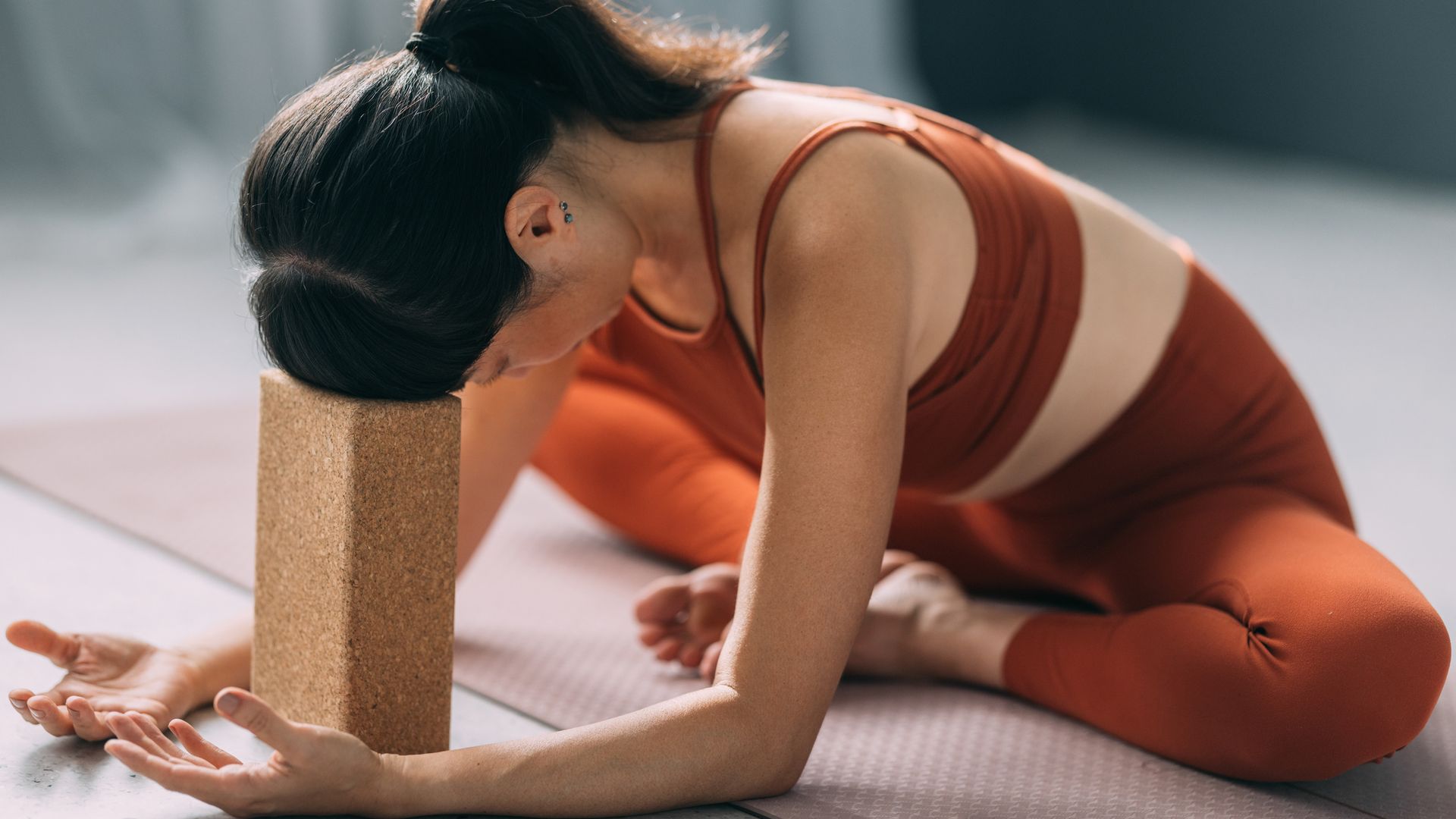

Restorative yoga is a gentle, therapeutic practice designed to deeply relax the body and mind through postures that are held for extended periods, and sometimes supported by props. Unlike more dynamic, movement-based styles of yoga, the primary goal is not physical exertion, but the restoration and balance of the nervous system.
As restorative yoga expert Raquel Mar (@yogadespacio) explains: "The goal is to restore both body and mind, at a physical and energy level, through deep relaxation and conscious breathing."
Restorative yoga postures are designed to comfortably support the body, allowing the muscles to completely relax
The expert also notes that the practice is designed to activate the parasympathetic nervous system, helping to lower cortisol levels. This, she says, "reduces stress and allows the body to enter a state of regeneration and balance."
The health benefits: from cortisol reduction to improved sleep quality
Restorative yoga offers numerous benefits for both physical and mental health.
Not only does it reduce levels of cortisol, the stress hormone, but it also helps to improve sleep quality because deep relaxation facilitates more restorative rest and combats insomnia.
 © Shutterstock
Although not its primary objective, restorative yoga can also increase flexibility; holding postures for several minutes encourages muscular elasticity and joint mobility. On an emotional level, the discipline helps to balance the mind, promoting introspection and the mind-body connection, fostering a sense of calm and wellbeing.
It can be combined with other yoga styles - ranging from the most challenging to the most gentle - and the true value of restorative yoga lies in its capacity to bring even more benefits to any type of practice.
However, Mar does point out: "Incorporating a restorative posture into an active yoga session - such as a brief Savasana of five to ten minutes - is not the same as a complete and sustained relaxation session of at least 60 minutes."
Essential restorative yoga props: Using bolsters, blankets and blocks for support
To facilitate relaxation and adequate support in the postures, various accessories, known as "props," are used. One of the most common is the bolster, a cylindrical cushion that provides support in reclined or chest-opening postures.
Blankets are also essential, as they allow certain parts of the body to be elevated or provide warmth and comfort during the session.
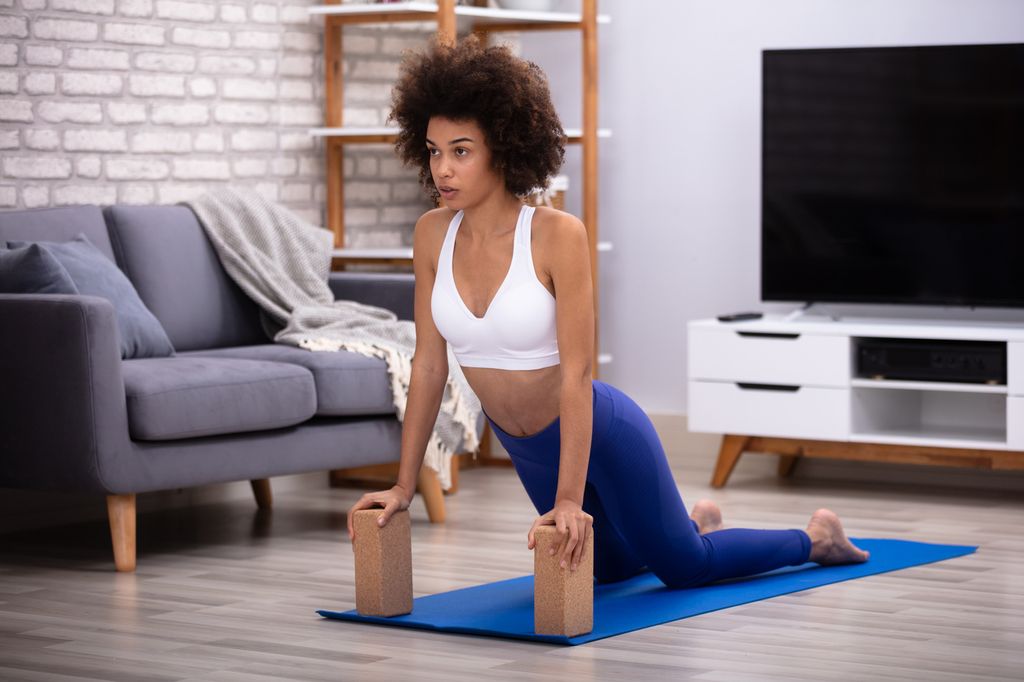
Yoga blocks help to adjust the height and support in different asanas, while straps or bands facilitate stretching without forcing the body, especially in postures that require reaching the feet or hands.
Restorative yoga sessions typically include a few postures held for periods of between five and twenty minutes each
Thanks to these elements, restorative yoga can be adapted to each person's individual needs, ensuring a safe and effective experience.
 © Getty Images
6 essential restorative poses to deeply relax your body and mind
1/6
 © Getty Images
Also called the Reclined Bound Angle Pose
Supta Baddha Konasana
One of the most frequently used asanas is Supta Baddha Konasana, or Reclined Bound Angle Pose.
To practise this, lie on your back, bring the soles of your feet together, and let your knees drop out to the sides, forming a diamond shape with your legs.
It is advisable to place a bolster along the length of your spine to lift the chest, with blankets tucked under your knees for greater comfort.
Benefit: This posture encourages the opening of the hips and chest, promoting a state of deep relaxation.
2/6
 © Getty Images
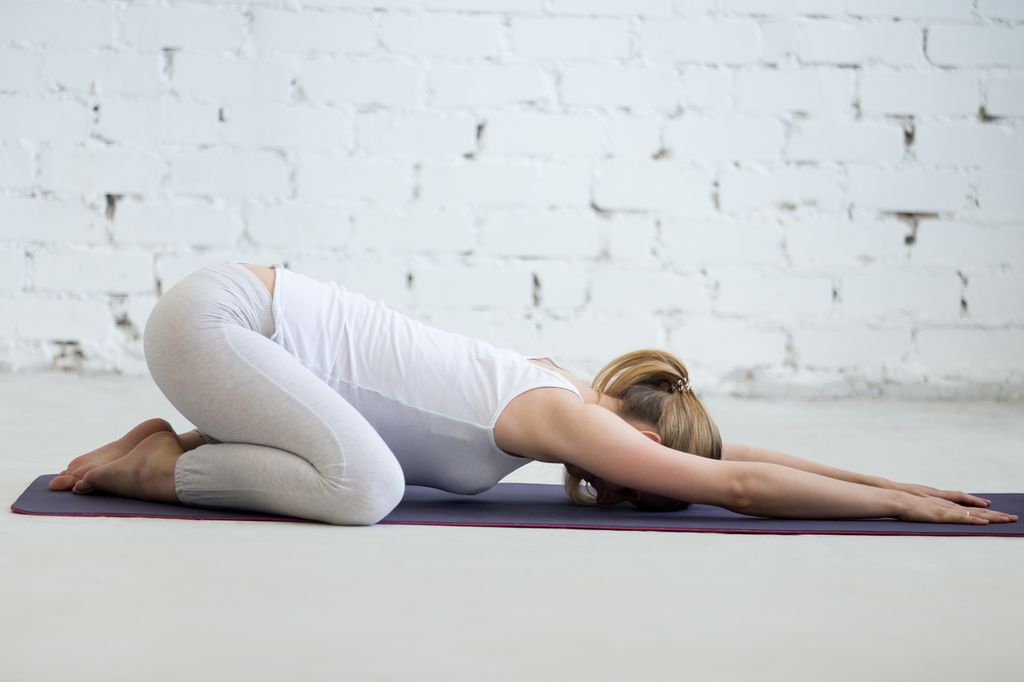
The Supported Child's Pose is a traditional Balasana, above, with your body resting on a bolster or blankets
Balasana
Another highly effective posture is Balasana, or Supported Child’s Pose.
Kneel on the floor and sit back on your heels. Lean your torso forward, extending your arms out in front of you, and rest your body on a bolster or several stacked blankets.
Your forehead should rest either on the support or the floor.
Benefit: This asana helps to relax the back, shoulders, and neck, while effectively alleviating stress and fatigue.
3/6
 © Getty Images
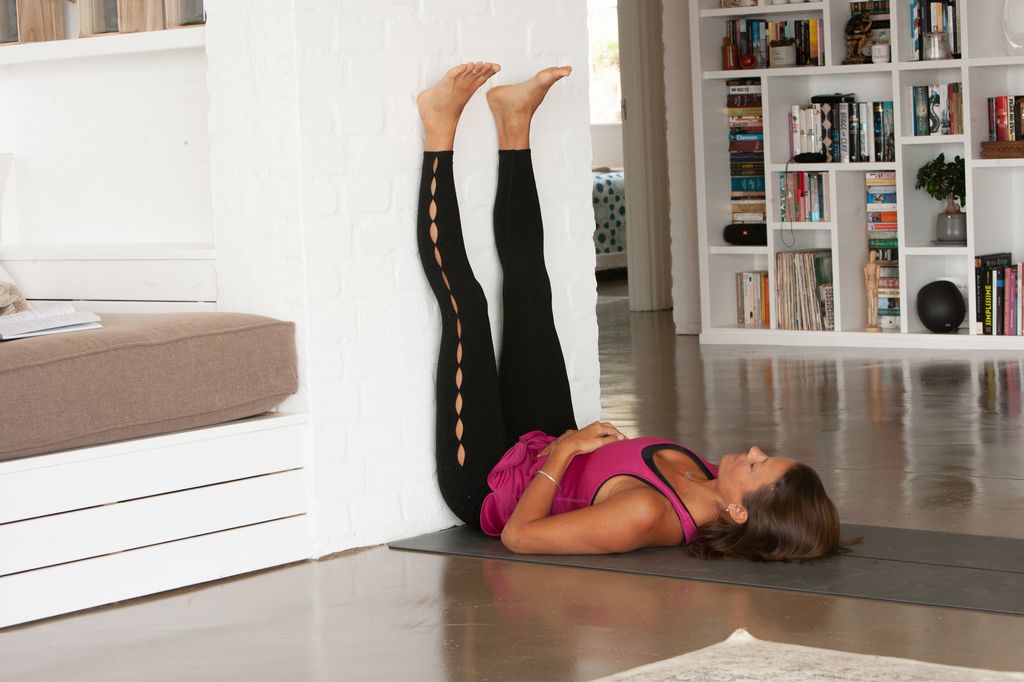
You may wish to place a bolster under your hips to elevate them slightly
Viparita Karani
Viparita Karani, known as Legs-Up-The-Wall, is another essential posture in restorative yoga. To practise this, lie on your back and raise your legs, resting them vertically against a wall.
Benefit: This posture improves circulation, reduces swelling in the legs, and has a deeply calming effect on the nervous system.
4/6
 © Getty Images
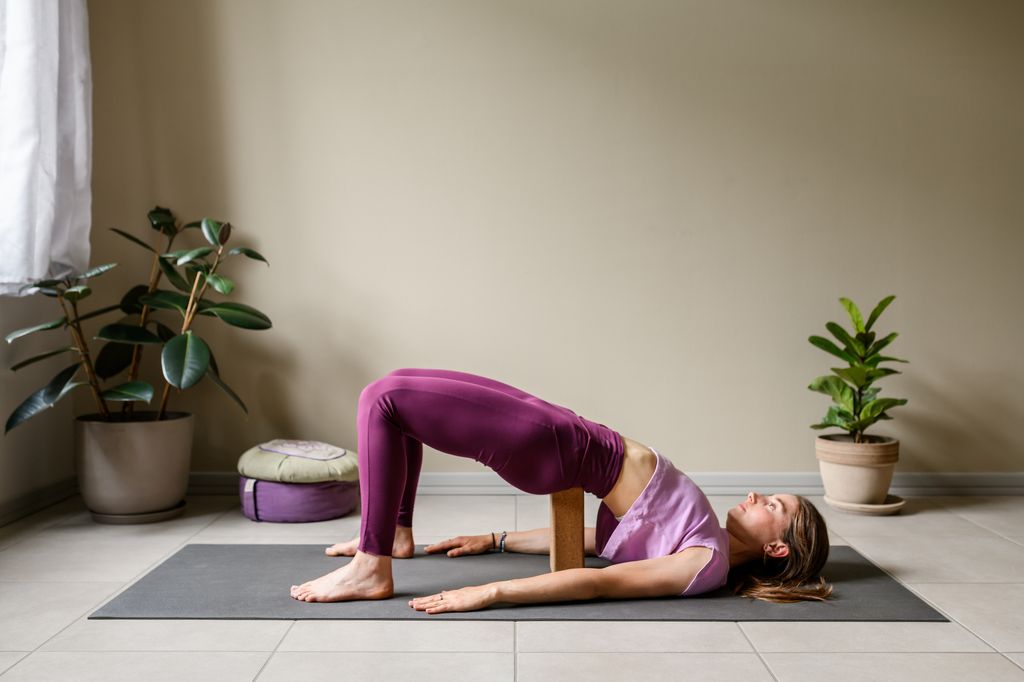
The Supported Bridge Pose uses a yoga block
Setu Bandha Sarvangasana
Supported Bridge Pose, or Setu Bandha Sarvangasana, is performed by lying on your back with your knees bent and your feet flat on the floor, aligned with your hips. From here, lift your hips and place a yoga block or bolster beneath your sacrum for support. Your arms should be relaxed at the sides of your body.
Benefit: This posture opens the chest and stretches the spine, promoting deep relaxation and providing relief from lower back tension.
5/6
 © Getty Images
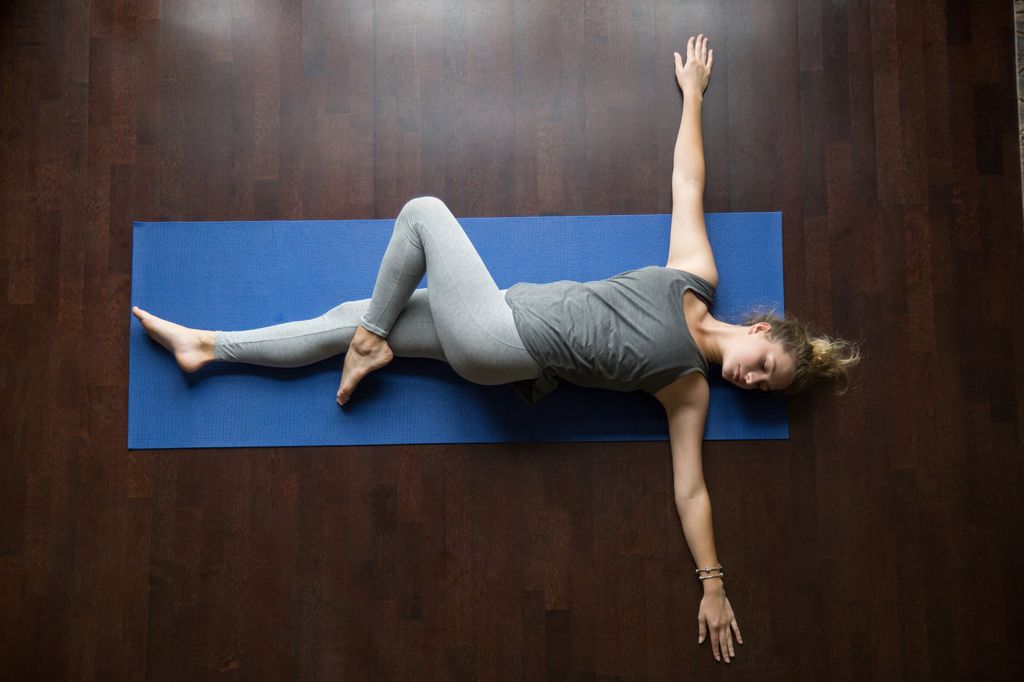
It is helpful to place a bolster or folded blankets beneath your knees for extra support
Jathara Parivartanasana
Another highly recommended asana is the supported Revolved Abdomen pose.
To practise this, lie on your back, draw your knees to your chest, and then gently let them fall to one side, turning your head in the opposite direction.
Benefit: This twist releases tension in the spine and aids digestion.
6/6
 © Getty Images
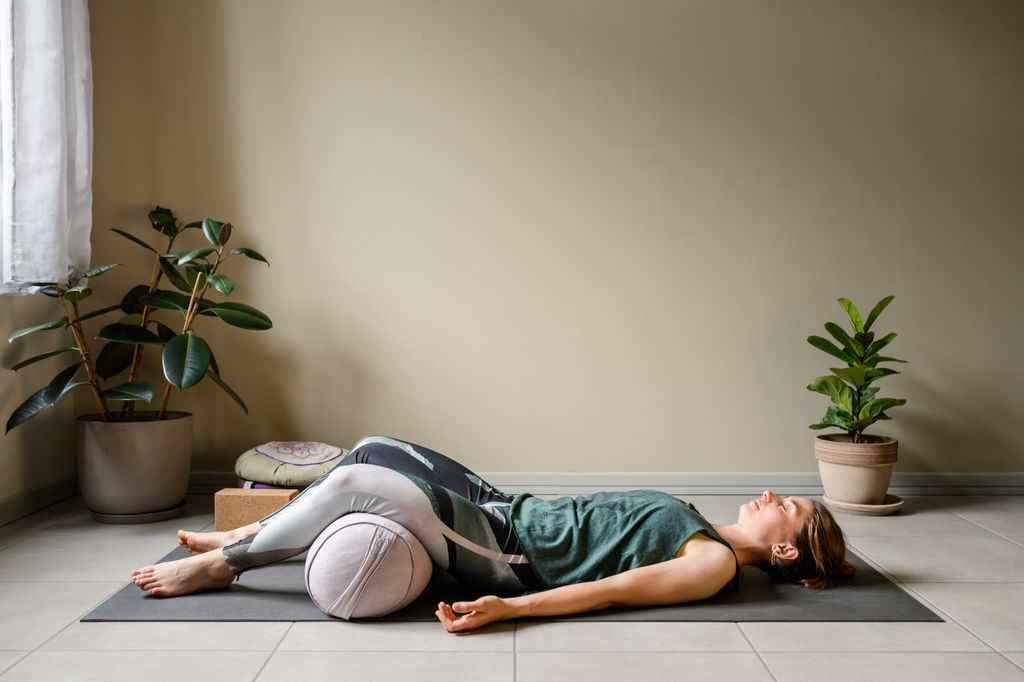
The 'Corpse' pose is the ideal way to conclude a restorative yoga session
Supported Savasana
Supported Savasana is the perfect posture to wrap up your session.
Simply lie on your back with your legs slightly apart and your arms at your sides, palms facing up. You may want to place a bolster beneath your knees and cover yourself with a blanket for added comfort.
Benefit: This posture allows you to reach a state of deep relaxation and facilitates the integration of the session’s benefits.
What to expect in a 60-minute restorative session
A restorative yoga session typically involves only a few postures - generally between five and six - each held for anywhere from five to twenty minutes.
- The total duration of the practice usually ranges from an hour to 90 minutes.
- To create a conducive atmosphere, the space should ideally be quiet, with soft lighting and a comfortable room temperature. The use of calming music and aromatherapy can further enhance the experience.
- The session begins with a brief meditation or breathing exercises to settle the mind.
- Postures are then introduced, with great care taken to ensure each practitioner is comfortably supported by the necessary props.
- Moments of transition may be included between each asana, allowing the body to assimilate the effects of the previous posture before moving on to the next.
- The session concludes with Savasana.
Achieving a full physical and mental reset
As yoga expert Raquel Mar concludes, when we allow ourselves this time of conscious rest, "the body enters a truly regenerative experience, helping to restore all systems of the organism." Think of it as a complete physical and mental reset - a simple way to help counteract overwhelm and the busy pace of our day-to-day lives.