
People up and down the country are putting up their Christmas trees, baking mince pies and getting ready to hang their stockings above the fireplace when the big day itself arrives later this month… but have you ever stopped to question why we have these festive traditions? HELLO! spoke to renowned folklorist Liza Frank – who spent an entire year living according to the rules of folklore for her book The Everyday Lore Project – to find out more about some of our favourite Christmas traditions.
“Folklore isn’t set in stone – even rituals handed down over the centuries are subject to change as people put their own spin on things,” says Liza, when I tell her that in our household it’s custom to make a wish on the first mince pie of the season – but not until after my birthday, in late November, because we don’t do anything festive before then. “That’s all folklore!” she tells me. “It’s your family folklore and that’s just as valid.”
Whether you’ve created your own way of celebrating Christmas, or adhere to the more traditional practice, “there’s no right or wrong way to do it”, she says. Here, in Liza’s charming, tongue-in-cheek style, we explore some of the major – and not so major – festive traditions…
Christmas trees
“Bringing a tree into the home seems to be a German custom brought to the UK by King George III's German wife, Charlotte,” explains Liza. “Queen Victoria was a fan, and it became popular. The German tradition can be traced back to the Middle Ages, but also with stories about St Boniface, an axe and some pagans in the 8th century… the tree represented the tree in the Garden of Eden and was displayed in the home on Christmas Eve as this coincided with the feast day of Adam and Eve.”
 © Getty Images
However, there’s a lot of discrepancy when it comes to ‘the right time’ to put up your tree. “This harks back to Saturnalia, which is the ancient Roman festival of midwinter, which was originally just for one day, on 17th December. But ancient Romans loved a party, so they decided, ‘Actually, we’re going to do this for 7 days’. There is no set time to bring your Christmas tree into the house. In America, as soon as Halloween, or Thanksgiving, is done, Christmas comes in. Some people start in Advent, or you could wait until, for instance, the 5th December, which is Saint Nicholas's Day. Then you've also got Saint Lucy's Day, which is the 13th of December.”
There’s just as much confusion about when to take your tree down. “There’s the tradition that says you have to take everything down by the 12th Night – and if you leave even a pine needle, then an evil spirit will erupt from it and plague your life. But Candlemas, which is 2nd February, is also a date where, supposedly, you need to have your decorations down by.”
 © Getty Images
This, says Liza, could be because there was a calendar change in the 1700s. “When we changed from the Julian to the Gregorian calendar we lost 11 days. So everything got completely pulled out of sync. So the 12th Night is either the 5th or the 6th January, depending on when you start your 12 Days of Christmas, or some people still celebrate the old 12th Night, which is on either the 11th, the 13th or the 14th. There are so many different points in the calendar that have changed, so you can never be really sure when something is supposed to happen. And so you have to go with what you kind of want to do and how you want to interpret a tradition.”
What if you don’t want a tree?
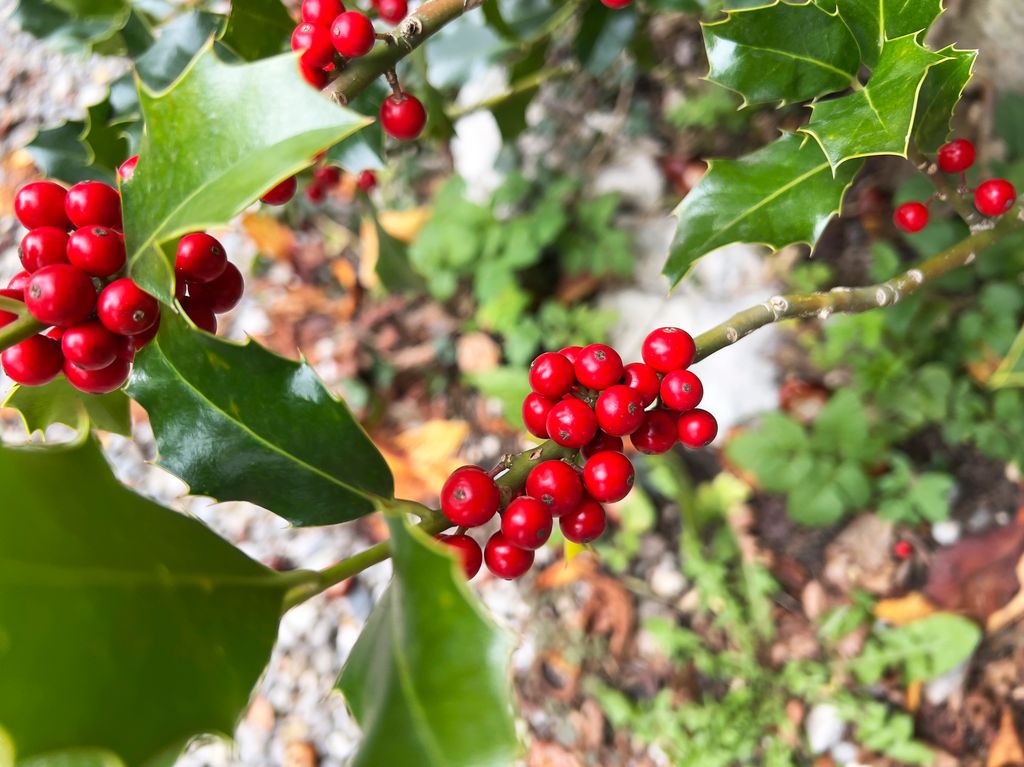
“People used to decorate ladders,” Liza suggests. “They would weave boughs of evergreen into their ladders. Or you could do as they used to do in ancient Rome, when they originally put the evergreens above thresholds – above doorways and on mantelpieces – to repel evil spirits and bring joy and prosperity to the household. Also, if you wove bay leaves into your decorations, it would help you be successful and to draw luck and love into your life.” Be careful with holly, though. “You're not supposed to bring it in before Christmas Eve, but you can't get rid of it until the 12th night.”
Mistletoe
 © Getty Images
And what about the tradition of kissing under the mistletoe? “It’s believed that the ancient Druids saw mistletoe as having potent sexual energy. It’s said there was a Saxon tradition of men having the right to demand kisses from any woman who passed near or under the mistletoe. But, after every kiss, the man had to remove a berry and a berryless bough meant no more kissing could be had underneath it. It was also said to be bad luck to refuse a kiss – a woman who did this would remain unmarried, but if a woman married without having been kissed under the mistletoe, she would remain childless. If a single woman is kissed seven times under the mistletoe, she will marry one of the seven within the year.”

Twelfthtide
“It is traditional that every one of these days – the 12 days of Christmas – corresponds to one of the following months. So the first day of twelfthtide will represent January, the second day, February, the third day will be March, and so on. You can use this as a tool for divination – maybe bibliomancy, which is getting a book – traditionally the bible, or similar – and you let it fall open at a page, and then you can either use a pin or your finger and, whatever line you go to, that is your prediction for that particular month. You can also do it with angel cards, you can do it with tarot cards, you can do it with your feelings – for example if you're not well on the 4th day, you're not going to be well in April. I write it down every day, and then I can see throughout the year how it goes.”
Mince pies
 © Getty Images
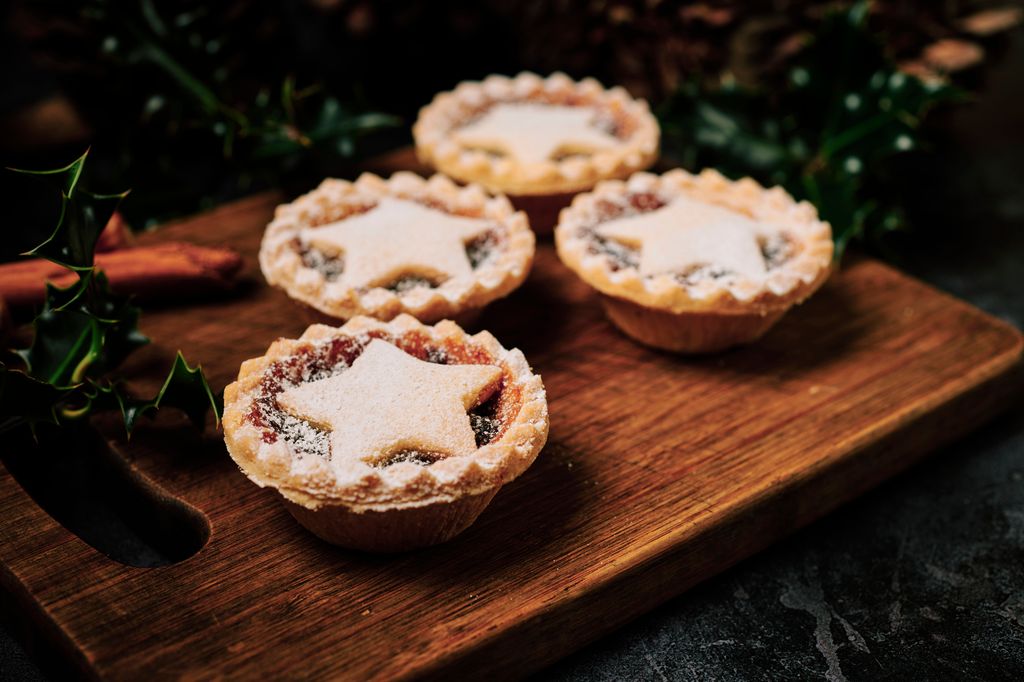
“I know everybody is quite mince pied out by Christmas, but you could have a mince pie every day of Twelfthtide (the 12 days of Christmas). As with Twelfthtide, each one represents a month of the upcoming year, and you have to say ‘happy month’ before eating it. If you miss a day, then you might not have such a happy month on that particular month, which is why you have to do it. You've just got to commit.”
Stir-up Sunday
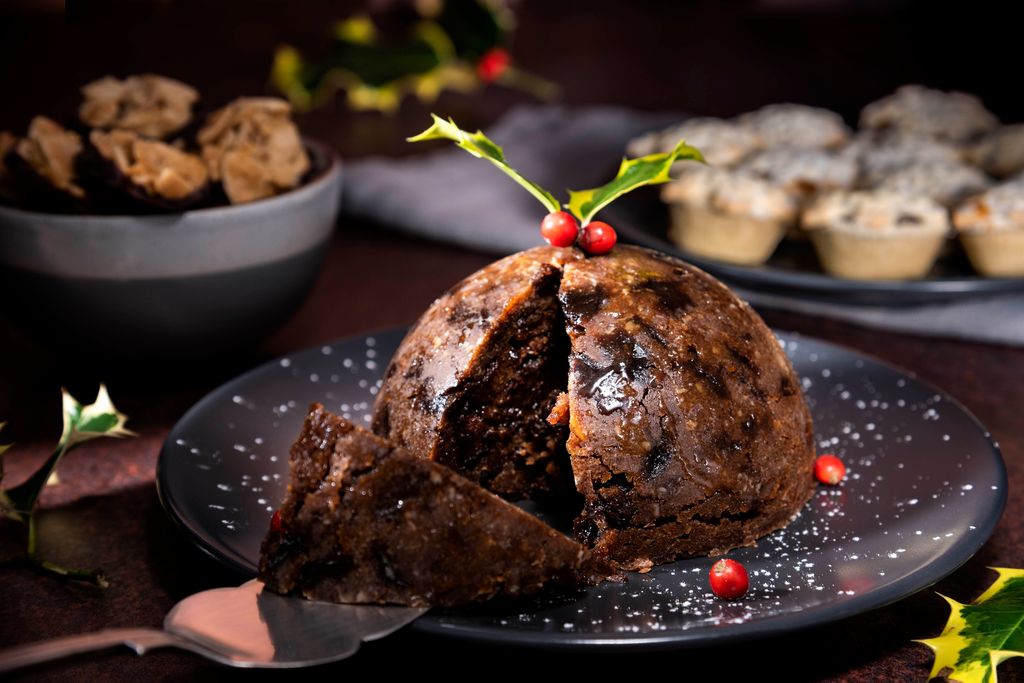
“Stir-up Sunday – the day people make their Christmas pudding, or Christmas cake – is the last Sunday before Advent starts, so this year it was 23 November, and I think it probably just gave the pudding enough time to settle. If you're doing a cake and you're feeding it with alcohol, it gives it time to make it moist. And then there are various things that you should put in your Christmas pudding – with the caveat that if you are sharing your Christmas pudding with other people, you must tell them – because if you're going to bite down on a ring or on an almond or something like that, there could be serious dental problems.”
 © Getty Images
There are other rules, too. “The first one is you're supposed to only have 13 ingredients. That's a nod to Jesus and the apostles. But as somebody that doesn’t believe in anything, I just put in as many ingredients as I like – and dark chocolate is an absolute game changer. You're always supposed to stir sunwise – clockwise, east to west, because you’re stirring in the luck. If you stir ‘widdishins’, which is anti-clockwise, you are stirring in bad luck and nobody wants to eat anything that's got bad luck in it.”
Advent calendars
“Obviously they've only been mass produced since the 20th century – people used to mark a little line with chalk on a doorpost. I think it was probably just a countdown.”
Yule logs
 © Getty Images
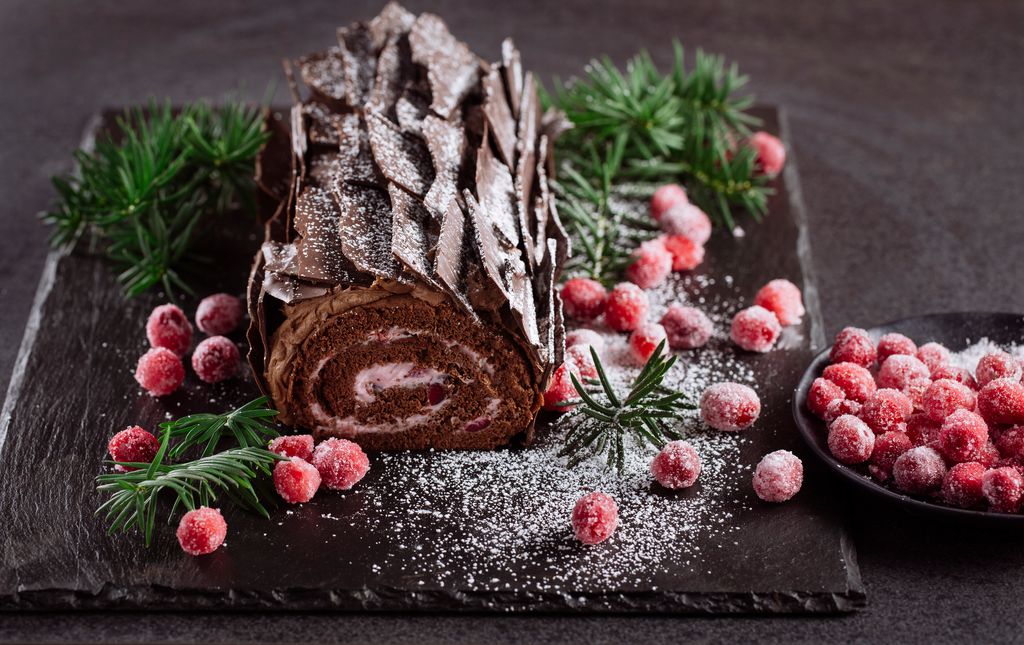
Yule logs didn’t used to be chocolate. “Something that I learned, to do with brain chemistry and when lights get dim, is that the brain chemistry dictates that our rational thought decreases and our supernatural magical thought increases. So when you're getting to the darkest point of the year, you may be more inclined to explain away the bumps in the night as being supernatural rather than the radiators settling.
"So, it makes sense that some people believe that there were witches. And you had to burn a Yule log for a certain amount of days in order to bring light and love and hope for the rest of the year. The tradition was that you would take a log from the forest, and sometimes it was enormous, and some people say that you burn it from the winter solstice through to the 12th Night, some people say you do it from Christmas Eve to the 12th Night – but either way, you keep the fire going, you keep the light and you keep the brightness, and you keep the love and the luck within the hearth.”
Liza Frank’s new book Household Lore is out now, published by Watkins