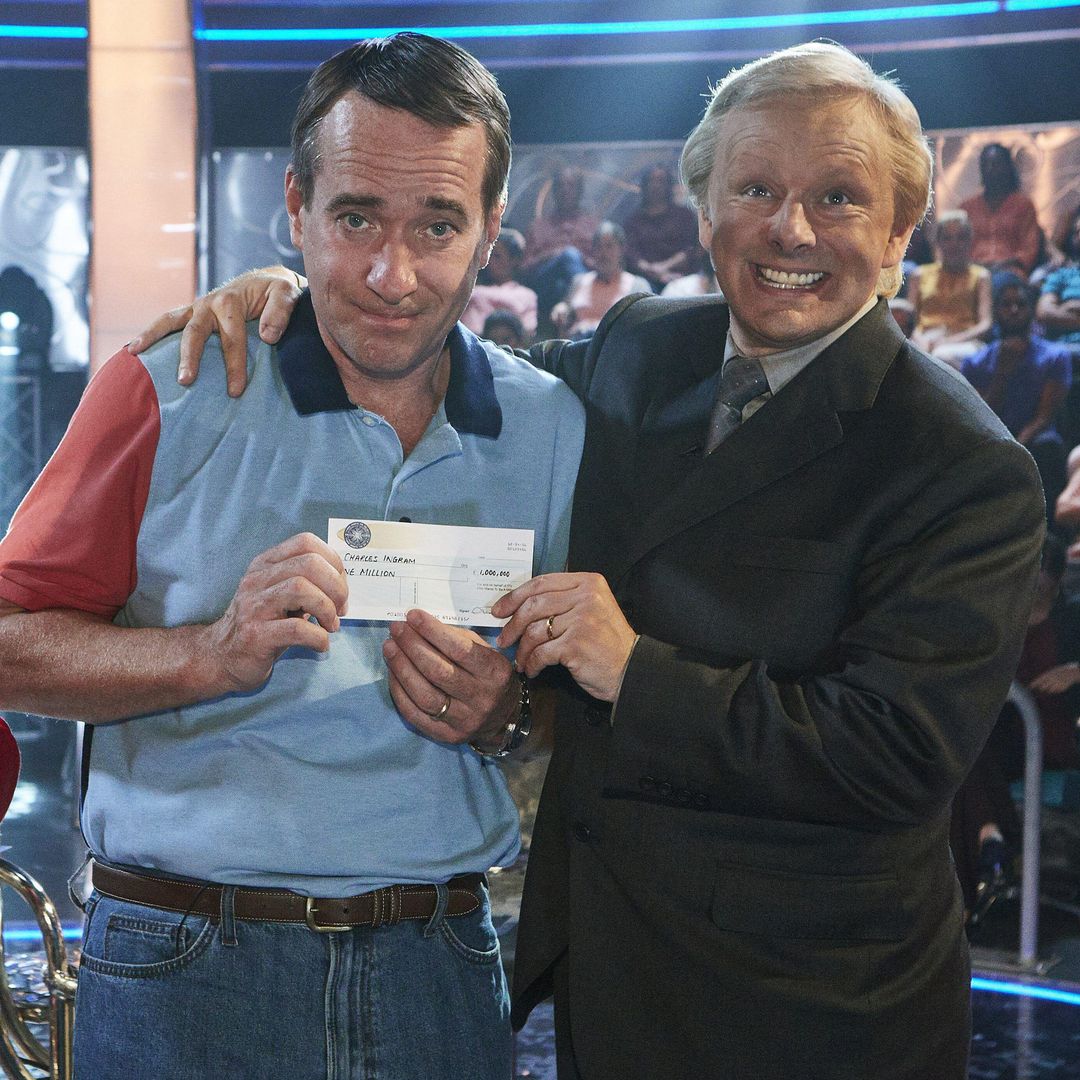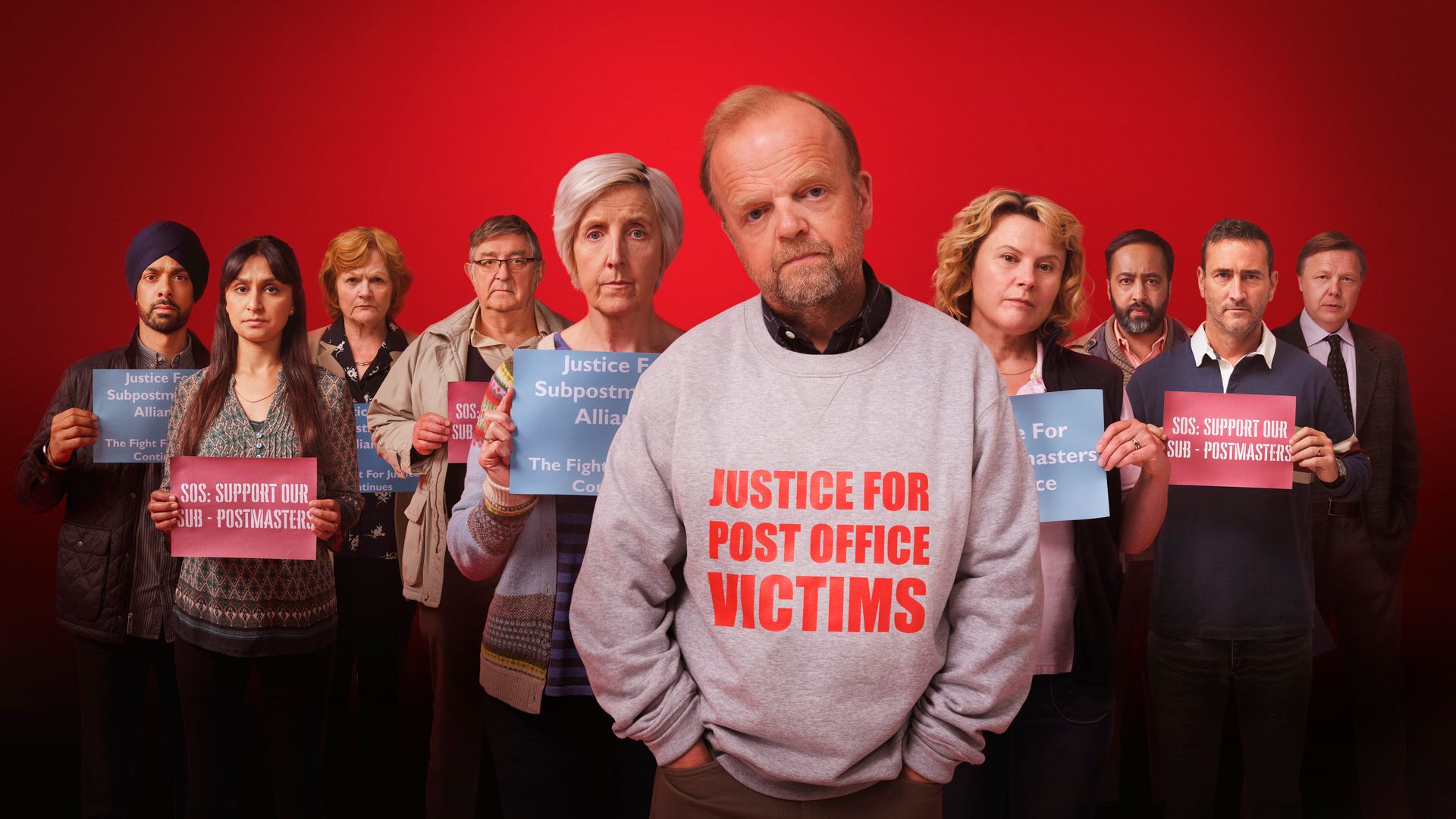

Television has an incredible power to shed light on major events and over the years, we've been treated to amazing issue-led stories from major broadcasters that have highlighted wrongdoing. ITV struck gold with Mr Bates vs the Post Office, which detailed the events of the Post Office scandal, involving hundreds of subpostmasters accused and even sentenced for theft due to the Post Office's faulty IT system, Horizon. The show brought a renewed interest in the scandal, and led to former Post Office CEO Paula Vennells losing her CBE, and subsequent legislation that quashed convictions between 1996 and 2018.
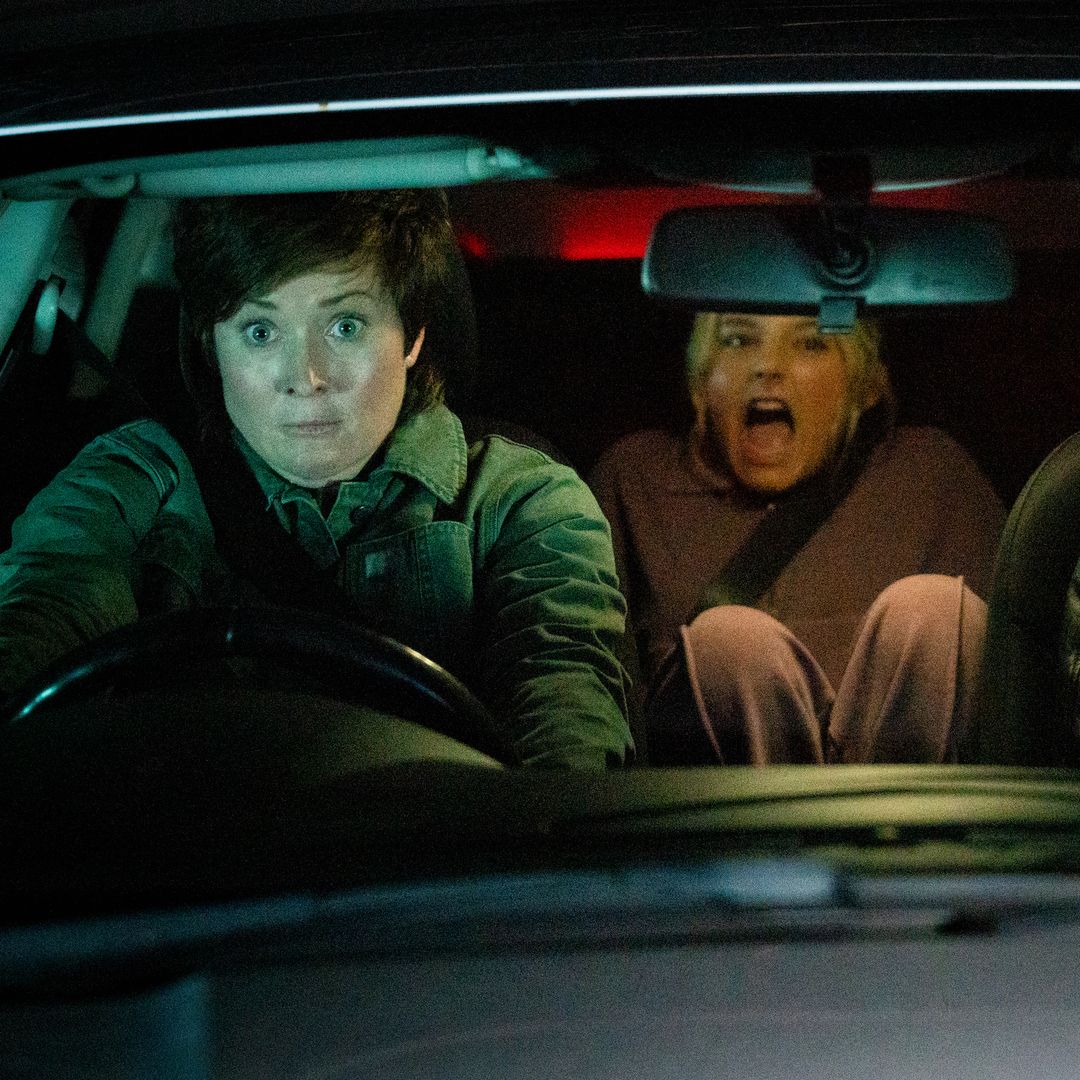
ITV will also soon be broadcasting The Hack, a seven-part series detailing the phone hacking scandal which led to the closure of The News of the World. The phone hacking scandal saw journalists from the publication hacking the phones of major public figures, including allegedly the royal family, in an attempt to gain stories. One particularly egregious instance was when it was revealed that murdered schoolgirl Milly Dowler had her phone hacked.
ITV certainly doesn't have a monopoly on dramas. The BBC aired The Trial of Christine Keeler, which dealt with the Profumo affair. The incident, which happened in the 1960s saw the married Secretary of State for War, John Profumo, embark on an affair with 19-year-old model Christine Keeler, the exposure of the affair led to Profumo's resignation and is thought to have contributed to the Conservative Party's defeat in a general election the following year.
Meanwhile, Channel 4 has produced Partygate, which was part comedy-drama and part docu-drama, which examined the 'Partygate' scandal when parties were held in No. 10 Downing Street during the stringent COVID-19 lockdowns.
HELLO!'s TV Writer, Abby Allen, said: "The overwhelming success of Mr Bates vs The Post Office highlights just how powerful television can be when it shines a light on real-life scandals and true crime. These shows not only keep viewers hooked, but they can also lead to tangible, real-world consequences." Here are five scandals, that we think would make perfect shows…
1/5
 © Getty Images
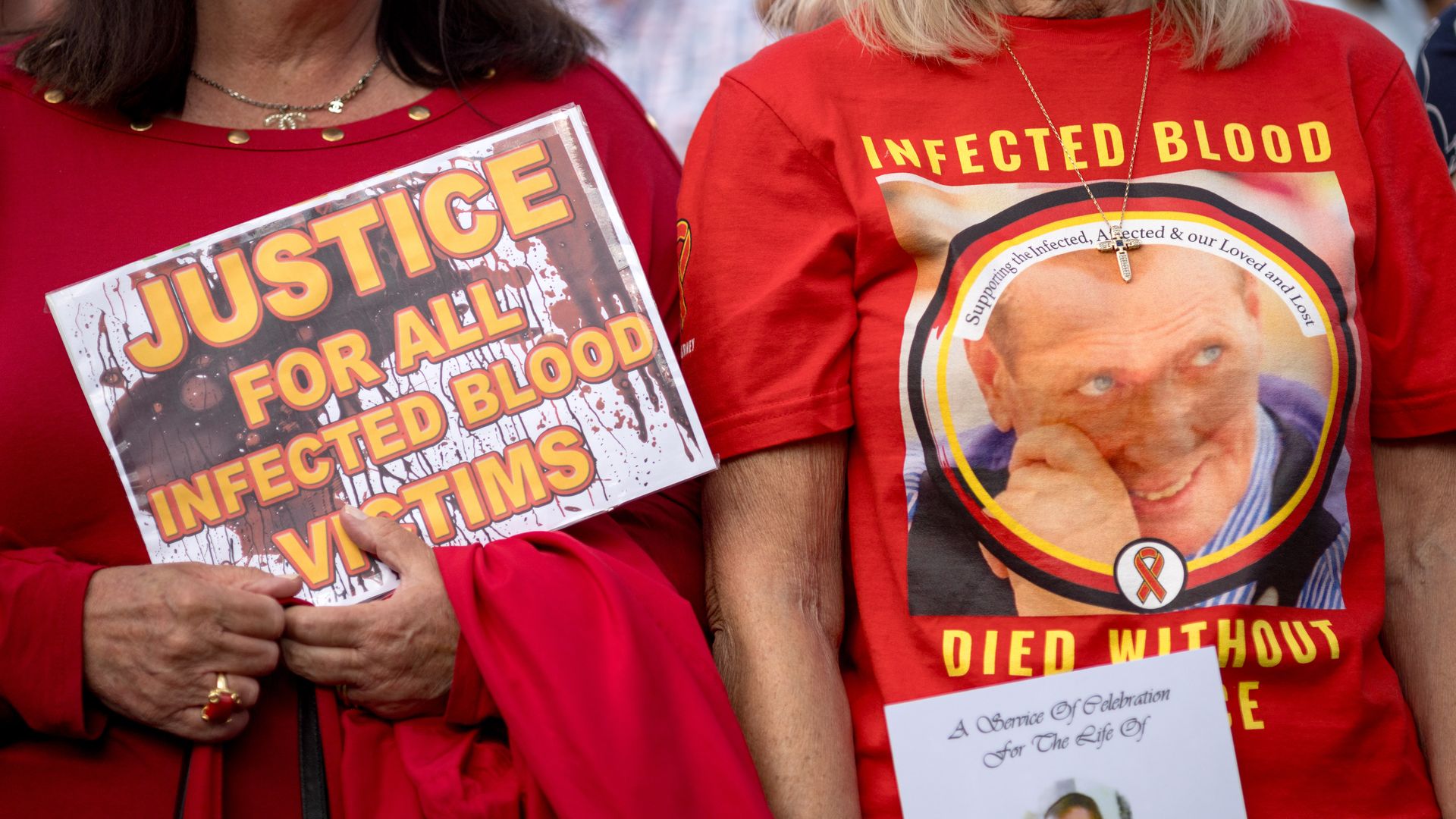
The infected blood scandal has been called "the worst treatment disaster" in NHS history
Infected blood scandal
In one of the biggest scandals in British history, tens of thousands of people were infected with diseases like hepatitis C and HIV during the 1970s and 1990s as a result of receiving blood transfusions from people with these illnesses. The blood had been imported from the United States, where at the time, there was a policy of paid donations, with blood coming from prisoners and drug addicts.
It's been estimated that 30,000 people received the contaminated blood and it has so far led to an estimated 3,000 deaths. A 1986 study found that 76% of people who received commercial clotting-factor products were infected with HIV as a result. A government inquiry was set up in 2017 by then Prime Minister Theresa May, with the final report being delivered last year.
The report did not hold back in its findings and described the contaminated blood scandal as "the worst treatment disaster in the history of the NHS". A compensation scheme has also been set up promising victims of the scandal up to £210,00.
The scandal hasn't yet received dramatization, although ITV has confirmed that they intend to air a series titled The British Blood Scandal: Poisoned At School. This will follow the stories of haemophiliac students who were sent to a specialist school, Treloar's, to live "normal lives", but were subsequently experimented on with the blood products. Of the 122 haemophiliacs who attended the school during the 1970s and 1980s, only 30 are still alive.
The scandal was also the subject of a 2005 documentary in the United States. Factor 8: The Arkansas Prison Blood Scandal, focused on a blood-harvesting scheme run by prisons in Arkansas in an attempt to make money. It featured interviews with prisoners at the time and how medical records were falsified by leaders in the prisons.
2/5
 © Getty Images
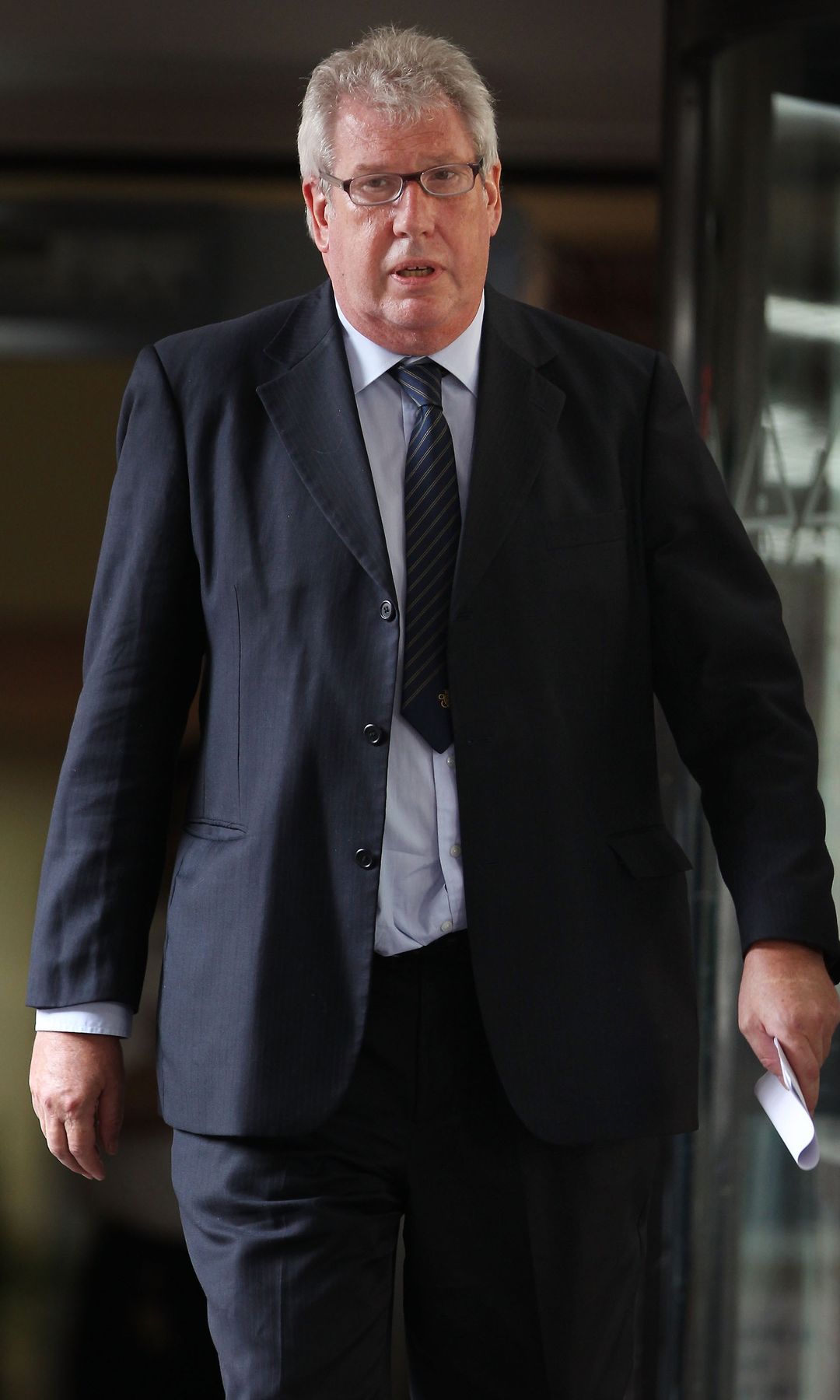
Elliot Morley was one of the MPs convicted over the scandal
Parliamentary expenses scandal
In 2009, a year before the 2010 general election, the Daily Telegraph released expenses claims of politicians after being leaked the information ahead of their official publication. The news sent shockwaves through the country as it was revealed what MPs were expensing on the public purse. Some of these include attempting to avoid tax while also furnishing second or first homes, as they might re-designate their primary residence.
One of the most famous examples from the scandal was the case of the late Sir Peter Viggers, the then Conservative MP for Gosport, who expensed £1,645 for an ornamental duck house in a pond on his estate. He paid the money back and stood down at the following election. Another saw then Home Secretary Jacqui Smith file an expenses report for pay-for-view adult movies that her husband had watched. She apologised and later resigned from the Cabinet.
The scandal saw six members of the government resign from the frontbench, while a further eight Labour MPs stood down because of being implicated in the scandal and the same number of Conservative MPs also resigned. The scandal also led to the resignation of the Speaker of the House of Commons, Michael Martin, and eight politicians were criminally charged as a result.
There has only been one dramatization of the scandal, with BBC 4 airing a one-off television film, On Expenses, in 2010, but we think now is the perfect time to make a drama. The BBC 4 drama starred Line of Duty's Anna Maxwell Martin as Heather Brooke, the journalist who broke the scandal, and Succession's Brian Cox as Michael Martin.
3/5
 © Arrizabalaga/EPA/Shutterstock
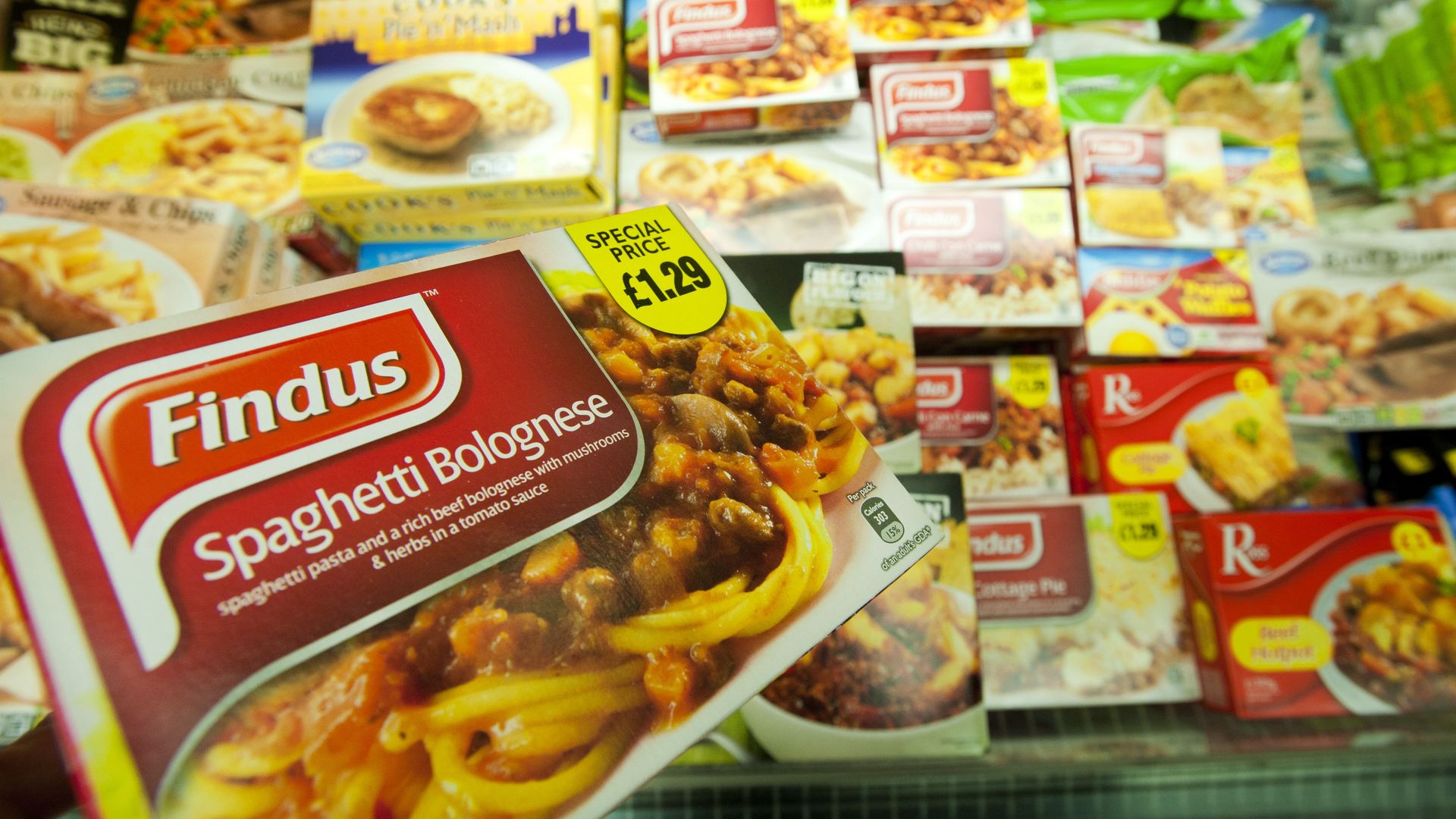
We think a drama on the investigations would be gripping
Horse meat scandal
One of the biggest food related controversies of recent years happened in 2013 when it was discovered food products in the European Union being sold as beef actually contained horse meat. 27 beef products were subsequently tested and 37% of them were found to contain horse meat, including lasagnes and shepherd's pies from frozen food brand Findus.
While not a major health scandal, it exposed the breakdowns in the traceability of the food supply chain and there were fears that harmful chemicals that could have been present in horses could have entered the food chain. There were also issues for religious groups whose religion may have prevented them from eating horse or pork that had also been mislabelled.
While other dramatizations on this list might focus more on the human cost of scandals, it might be interesting to follow one from a law enforcement perspective as they trace the products; several factories were closed as a result of the scandal and there was even a seizure of meat products in December 2013. A documentary on the scandal was produced by Sky, simply titled The Great Horsemeat Scandal.
4/5
 © Matthew Chattle/Shutterstock
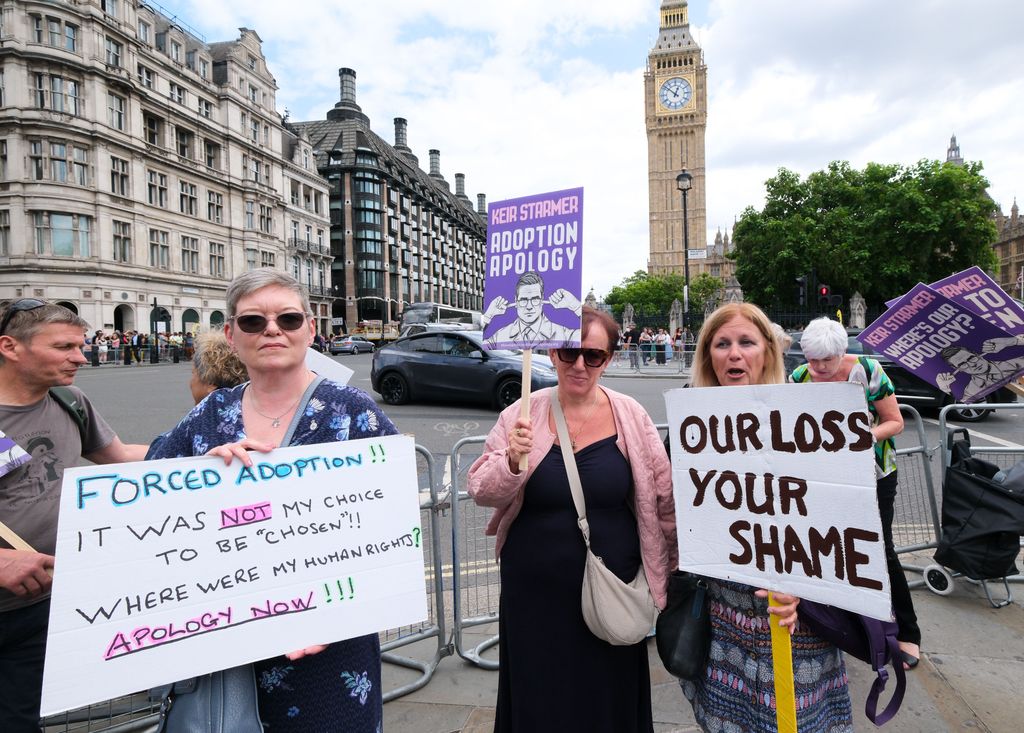
Victims haven't yet gotten an apology
Forced adoption scandals
Between the 1950s and 1970s, babies were often taken from their mothers and put up for adoption. The practice targeted single or teenage women, who would be coerced, shamed and sometimes even drugged so that they would give up their babies to social workers, religious institutions and hospitals. The reasoning for taking away the children was often flimsy, with unmarried mothers being deemed as "unsuitable" parents, no matter the circumstances.
Families involved are also prevented from speaking openly about what they've gone through due to court orders deciding it's more important to protect a child's right to privacy. A movement calling for an apology started in 2007, with families who had been affected by the scandal forming over social media. A report published in 2022 called on the government to issue an apology; however, in their own response to the report, this was declined. Other governments around the world, including in Scotland and Australia, have apologised for their own versions of the scandal.
5/5
 © Getty Images
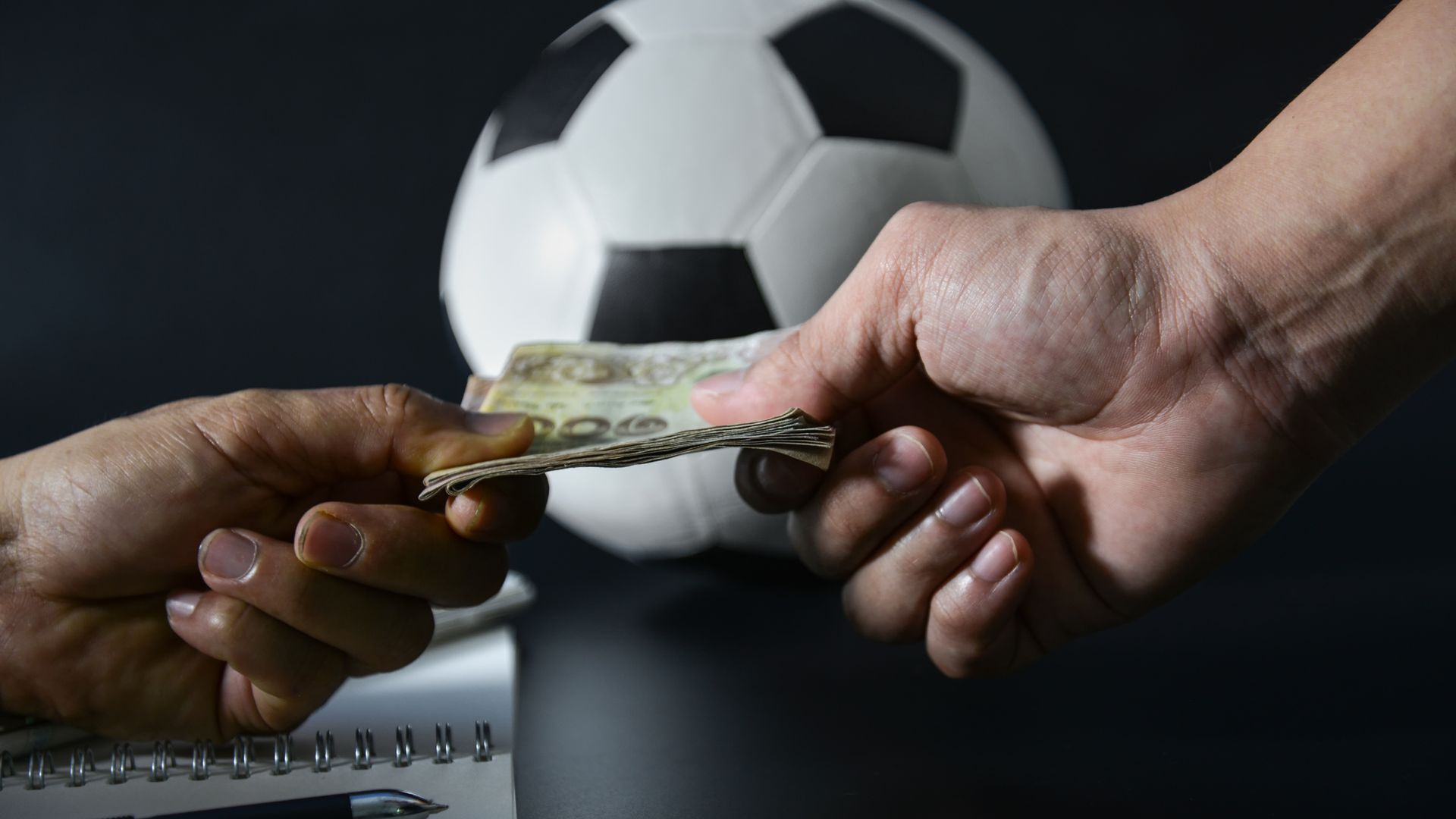
Sports fixing remains controversial
Match fixing in football
Sports enthuse people up and down the country, so any match-related scandals prove devastating for fans. In 2013, the Daily Telegraph and the Sun on Sunday published reports into the fixing of association football matches. An alleged fixer in Manchester claimed they could fix a result for £70,000 and that a player would be offered a £5,000 tip to get a yellow card near the beginning of the match to confirm that the score would be manipulated. The Sun on Sunday's report centred on players getting themselves booked for cash payments.
On 26 November 2013, two businessmen, Krishna Ganeshan and Chann Sankaran, and footballer Michael Boateng were jailed for conspiracy to commit bribery. The match was due to be played between AFC Wimbledon and Dagenham & Redbridge. The National Crime Agency highlighted that there may be further instances in the sport.