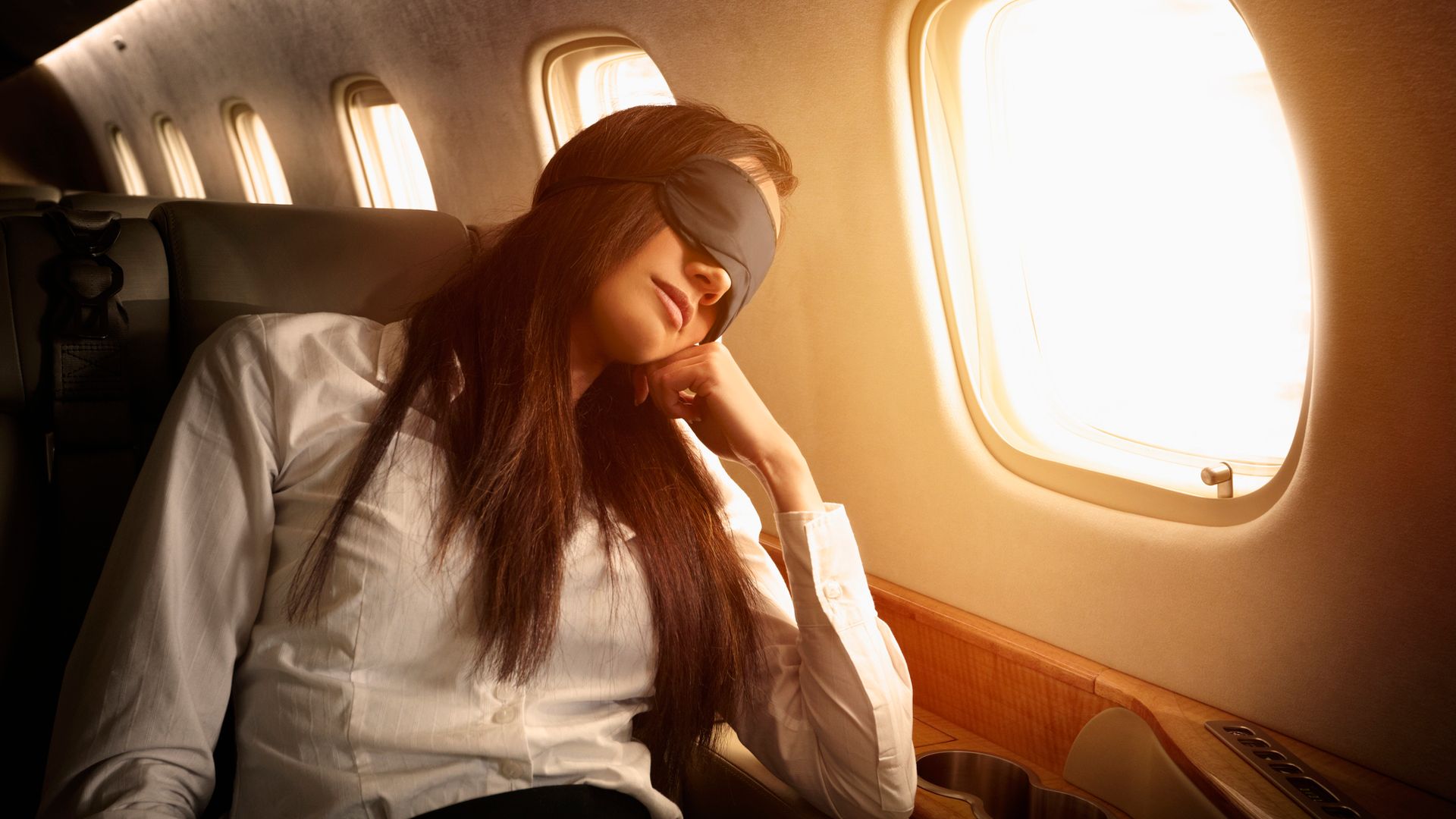
Travelling is one of the greatest joys of life. Being able to head to new places far and wide, exploring different cultures, soaking up sights and making precious memories is a privilege. But there's no doubt about it: travelling is exhausting. Particularly when heading to far-flung places, the impact of long-haul travel can affect our bodies in many ways. If you've ever experienced serious jet lag, then you'll know the physical toll it can have, which, ultimately, eats into your days spent away from home.
A recent study conducted by Yotel found that almost a third of Brits asked (32 per cent) avoid long-haul travel completely due to the fear of getting extreme jet lag. And those who do suffer report it as "challenging" due to the exhaustion, headaches, trouble concentrating and nausea experienced when suffering from jet lag. But if you ask me, avoiding travel seems like a shame when there's so much to see and experience in our big, wide world. Instead, figuring out how to travel smart and doing our best to mitigate jet lag as much as possible seems sensible.
Think you know jetlag? What's really happening to our bodies when we travel
I remember landing in western Canada after a ten-and-a-half-hour flight from London and doing my best to stay awake until it was time to go to sleep on BC time. Sitting in a restaurant in downtown Vancouver, my head was bobbing like nobody's business. If someone had asked my name, I'm not sure I would have been able to answer. It's more than just feeling tired; what's happening to your body is much more physiological.
Dr Elisabetta Burchi, Psychiatrist and Head of Research at Parasym, shared her take on what's really going on. "Most people think jet lag is just tiredness from travelling across time zones. But that is just one symptom of a more complex alteration in the body's homeostasis occurring when the core circadian system is out of synchrony with the environment," she said. "A meaningful sign of this disruption is given by the decrease in vagal tone and heart rate variability (HRV), which we often see after long-haul flights.
"That underpins the decrease in the body's resilience and adaptability. In fact, as the vagus nerve plays a pivotal role in adaptation to environmental challenges, by bidirectionally linking the brain and the internal organs, HRV, as a reliable measure of autonomic function, seems to represent a chronobiologic integrative marker for mental and somatic (mind and body) health."
Put simply, it's not just a case of feeling sleep-deprived. It triggers an imbalance in the autonomic nervous system, pushing the body into 'fight-or-flight' mode. The result? Brain fog, low mood, poor immunity, and persistent exhaustion. Dr Burchi adds: "Disruption in the circadian rhythms and autonomic tone (the balance between the two nervous systems) leads to alteration in sleep, alertness, hunger, digestion, body temperature and secretion of hormones."
Best tips for mitigating symptoms of jet lag
It's safe to say there is a lot going on internally when we travel across time zones. And while the fundamental hormonal changes can't necessarily be prevented – our bodies will react regardless – there are ways to ease the symptoms of what is happening and, ultimately, make us feel a little better when travelling.
Sleep routine before you travel
The NHS guidance has some easy-to-implement methods to ensure your body is in the best condition possible to handle the jet lag that will inevitably hit you. "Get plenty of rest before you travel. You could start going to bed and getting up earlier or later than usual (more like the time zone of the place you're travelling to)," it states.
Stay hydrated
They also advise remaining hydrated. When our bodies are hydrating, they regulate our core temperature so that it can drop efficiently, which promotes good sleep.
Stay active
The NHS also advise taking regular walks around the cabin (when permitted) to keep muscles warm and moving. Stretching regularly also helps. They also advise trying to sleep even if your body hasn't adjusted yet. Earplugs and eye masks at the ready...
Avoid the fizz
It might sound obvious, but avoiding that cup of coffee or bubbling glass of champagne on the flight is going to help in the long run. Caffeine is a stimulant that will prevent your body from producing the sleep hormone, meaning your body's sleep routine will be disrupted. Alcohol, meanwhile, can induce 'sleepiness' but will result in poor sleep quality, meaning your body doesn't get the proper rest it needs.
Vagus nerve stimulation
Another more physiological method, according to Dr Barchi and fellow experts, is by stimulating the vagus nerve (VNS), which has been used as a treatment for other conditions such as depression, inflammation and epilepsy. Parasym, a UK neurotechnology company, has developed Nurosym, a CE-marked, ear-worn, non-invasive device that stimulates the vagus nerve through gentle electrical pulses. It sounds complicated, but unlike meditation or breathwork, Nurosym requires no effort or focused attention, making it ideal for travellers to use on flights, in hotel rooms, or between meetings.
As Dr Burchi explains, "Dozens of clinical studies confirm that this approach, transcutaneous auricular vagus nerve stimulation, can lead to improved sleep quantity and quality, reduced fatigue, reduced brain fog, and enhanced recovery from physical and mental stress, as well as improvement in key biomarkers such as HRV or inflammatory cytokines. Nurosym gives your autonomic nervous system a gentle nudge back into balance. It's like a pacemaker for the brain, which boosts the body's rest and digest mode, helping travellers recover faster, improve their sleep, and reset their internal clock more quickly."