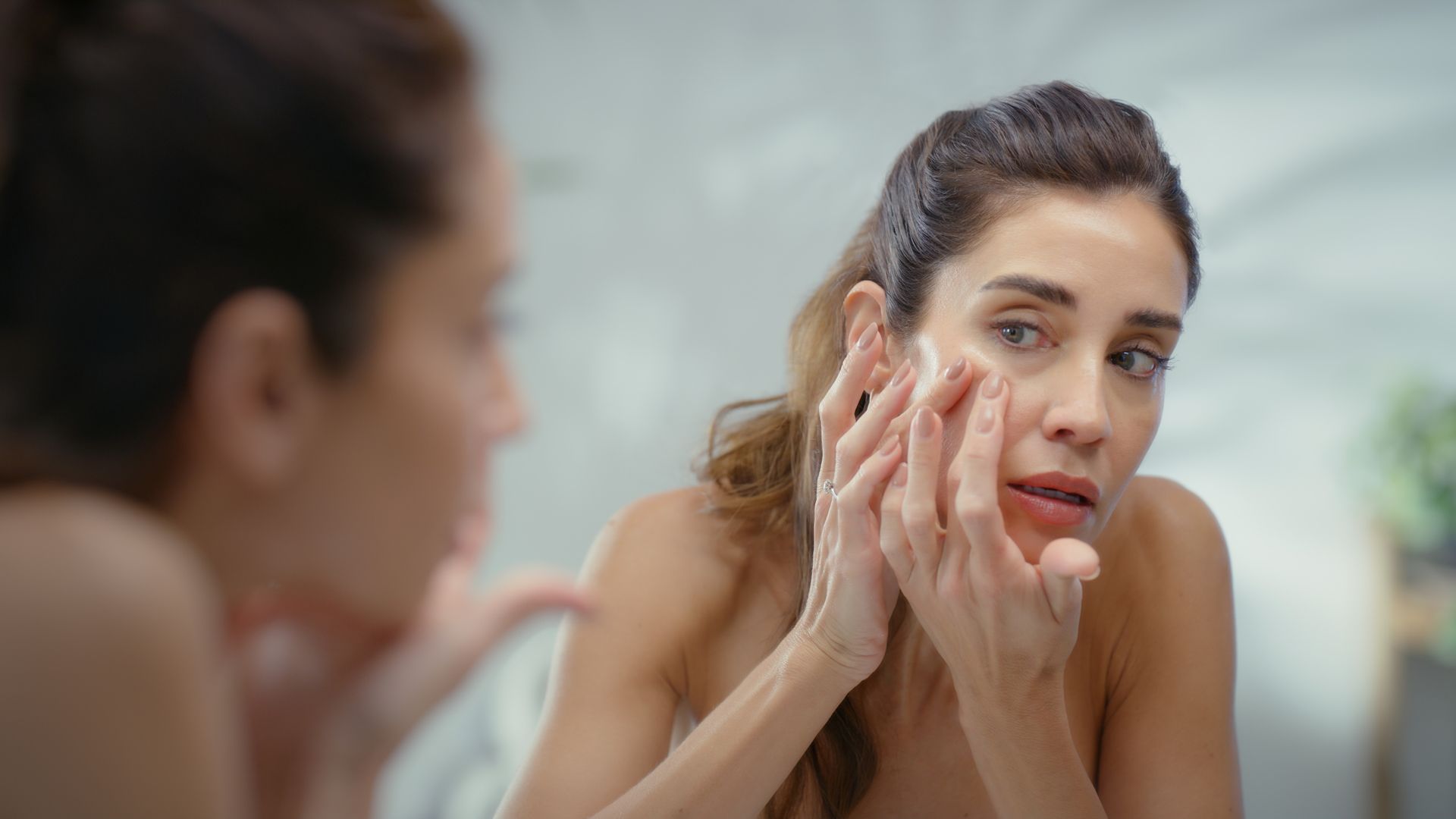
Have you ever noticed small, white blemishes on your skin that look like acne but don't seem to go away? You've probably wondered what those stubborn spots actually are, but the good news is that it's very likely that you don't have to be concerned. It's likely you're dealing with milia - also called milk spots or oil seeds - which are small white bumps we often confuse with similar-looking skin conditions like pimples or blackheads. They're quite common and they can also be fixed, even without a dermatologist. But the first step is, don't even think about "popping" them. Instead check out these expert tips on how to get rid of them safely.
What are milia?
Milia are tiny cysts, usually between 1-3mm (.04-.12in) in size, that are often confused with whiteheads. "They're not caused by clogged pores - they're caused by the buildup of keratin," explains Paula's Choice Skincare Education Specialist David Fernández Polo.
These keratin-filled bumps, which aren't painful or inflamed like acne sometimes can be, affect people of all ages, from newborns to those with mature skin.
Milia - called milium in singular form - usually vanish on their own within a few weeks. However, they aren't always just a cosmetic issue.
They can be linked to several underlying skin problems, such as abnormal keratinisation, a process where skin cells that produce keratin don't shed properly. Instead, these cells build up under the skin, forming small cysts.
What causes milia?
A breakout of milia can be triggered by several factors. Some of the most common causes include:
- Genetics. Some people may be predisposed to developing milia.
- Sun exposure. Sun damage not only affects the overall appearance of your skin, but can also cause milia to form.
- Improper skin cleansing. Not cleansing your face well can cause a buildup of dead skin cells.
- Heavy skincare products: Pore-clogging products, such as comedogenic creams, can also contribute to milia formation.
How to remove milia at home
Although milia often disappear on their own over time, this can sometimes take months (or more). A more persistent milium may need to be carefully extracted by a dermatologist so it won't leave a scar. There are some strategies you can try at home, though, to help get rid of them.
Exfoliation with BHA
Salicylic acid (BHA) is a chemical exfoliant that can be highly effective in removing dead skin cells and preventing the buildup of keratin. Regular use of an exfoliant containing BHA can help not only to eliminate existing milia but also to prevent their future formation.
Gentle, deep cleansing
Use a gentle cleanser that removes impurities and dead cells because buildup can contribute to a milia outbreak.
Do not attempt self-extraction
It's very tempting, but you should never try to pierce or remove a milium on your own. It could get infected and damage your skin. So if the milium (or milia) doesn't go away on its own, it is best to consult a dermatologist.
How to prevent milia
Prevention is key to keeping your skin clear of milia, so keep these tips in mind:
- Exfoliate your skin regularly. Apply a gentle exfoliant with BHA at least once a week, or as recommended by your skin care specialist. This will help keep the skin smooth and free of dead cells.
- Use sun protection daily. Since sun damage can contribute to multiple skin issues - including the formation of milia - always use a broad-spectrum sunscreen with an SPF of at least 30. Protecting your skin from the sun is an essential part of any skin care routine.
- Choose non-comedogenic cosmetics. Skin care products and makeup labelled "non-comedogenic" will not clog pores, which will helps avoid the accumulation of dead skin cells.
- Keep your skin hydrated. Well-moisturised skin tends to look healthier overall, and good hydration can help regulate keratin production. Choose light moisturisers that provide hydration without leaving a greasy residue.
Understanding what milia are and how they form is the first step to treating them - and preventing them from appearing in the first place. If you have a milium that won't go away, consult with a dermatologist so you can finally show off radiant, blemish-free skin.