Did you know that autumn is a time of year known for seasonal hair loss, where you may see a dramatically increased amount of hair shedding? This shouldn't be cause for alarm, because it's a natural process, but that doesn't mean there aren't hair tips on how to curb the loss. Dermatologist and trichologist Carlos Morales Raya explains that just like you may change your approach to your skin care, your scalp requires special care once the summer season ends. "The scalp is essentially skin, but it has more sebaceous glands and terminal follicles (which grow thick hair) instead of the fine hair follicles found elsewhere."
He adds: "A healthy scalp is essential for growing strong, healthy hair. A well-maintained scalp also helps to properly regulate the secretion of certain necessary components, such as sebum. While sebum protects the hair fibre, an excess of it can lead to problems and also cause the hair shaft to look dirty."
The phases of hair growth and loss
To understand how the natural hair process works, we have to first grasp the many phases it goes through, from the growth phase to the phase where it sheds.
Every hair on your head is always in one of these phases, but they're not all in the same phase at once. (Essentially, that's why all of your hair doesn't shed at the same time.)
- Anagen phase: The active hair growth phase, when new hair is produced. It usually lasts about four years, with an average growth of one centimetre (.4 inches) per month.
- Catagen phase: A transitional cycle - the hair maintenance phase - when the hair stops growing; it lasts up to about four weeks.
- Telogen phase: It is during this phase that the hair strand is dormant; the hair shaft loosens, that's when hair sheds.
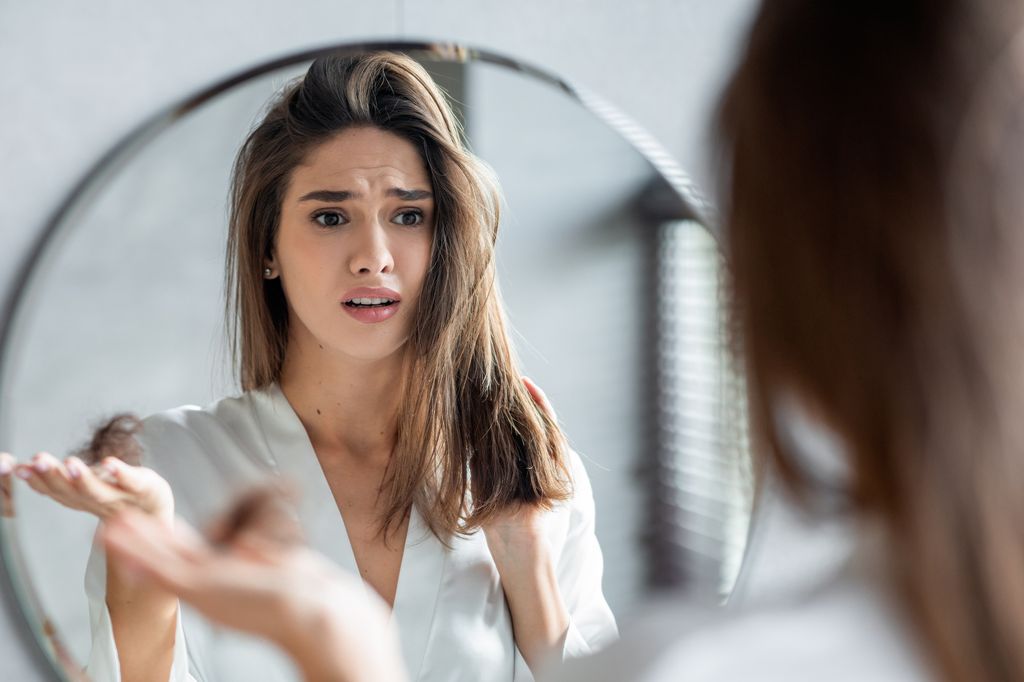
Because of the seasonal change to autumn, though, you may find your hair loss is greater overall during the season.
"The process of hair loss and regeneration at this time of year is completely normal, but this increased post-summer shedding might start to bother you," explains Carla Ramón, product manager for health supplement brand Solgar. "Even though there's no real cause for concern, and there's really no need to address it if you don't want to, you can adopt a hair routine that helps you better take care of your hair health."
 © Prostock-Studio
Treatments that work
Among some of the things you can do to curb autumn hair loss are treatments such as mesotherapy and platelet-rich plasma (PRP), described by Johns Hopkins as injections that use a patient's own blood cells to accelerate healing - in this case on the scalp. "These hair treatments work to stimulate the follicular cycle, encouraging the growth of hair that is denser and thicker," explains the trichologist. "Additionally, they help repair and stimulate follicular differentiation (the process that guides cells to become new hair) to effectively prevent hair loss caused by certain types of alopecia."
"The process of hair loss and regeneration at this time of year is completely normal"
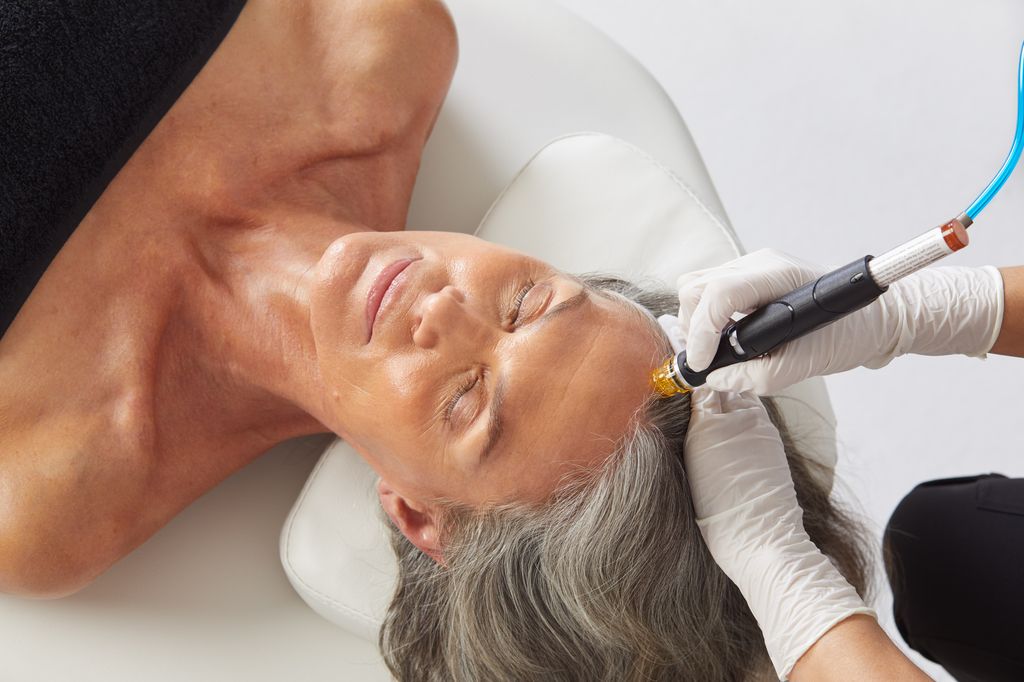
Hydrafacial offers a specific treatment protocol for the scalp called Keravive, which we have tested ourselves. It works similarly to the vitamin skincare treatments that are performed on the face, but it is applied to the scalp and does not involve injections. You can treat the entire scalp or just specific areas where there may be more pronounced hair loss, for example, the crown or hairline.
"It's a painless, non-invasive treatment designed to exfoliate, nourish and hydrate the scalp, improving microcirculation and nutrient absorption. That helps thicker, stronger and healthier-looking hair," says Dr Morales.
 © Keravive
Treatment aside, good hair care begins with the simplest things, from good hydration to a diet rich in nutrients such as proteins, zinc and iron, which are essential for good hair health. You can also add an extra boost to a healthy diet during this time of increased hair loss with hair growth supplements specifically created to help with this issue.
Other expert tips include staying away from extremely tight hairstyles - let the hair "breathe" after summer by wearing it out or opting for looser hair looks. Also, try and reduce the use of heat on your hair, as these type of hair tools have been shown to have a direct effect on hair health, leaving it drier, more vulnerable and brittle.
When should you be worried about hair loss?
According to experts, you may want to speak to a professional if you're losing more than 100 hairs daily and it continues for more than three months - or if you're seeing bald patches.